Our journey to Kamoka pearl farm started with a little doomscrolling & a dab of Instagram profiling. A video titled ‘The Most Remote Farm on Earth’ starts with a zoomed-out image of our blue planet slowly rotating and zooming further and further into the middle of the Pacific Ocean until the outlines of the tiny atoll of Ahe appears. Zoom in a little further and there, a few metres offshore, on a pristine reef, propped up by a series of stilts, sit the wooden structures that make up Kamoka pearl farm.
A quick Google Maps search later, and Ahe was added to our very fluid itinerary. It’s only 2 atolls and a meagre 220 nautical miles away from our current anchorage of Tikehau.
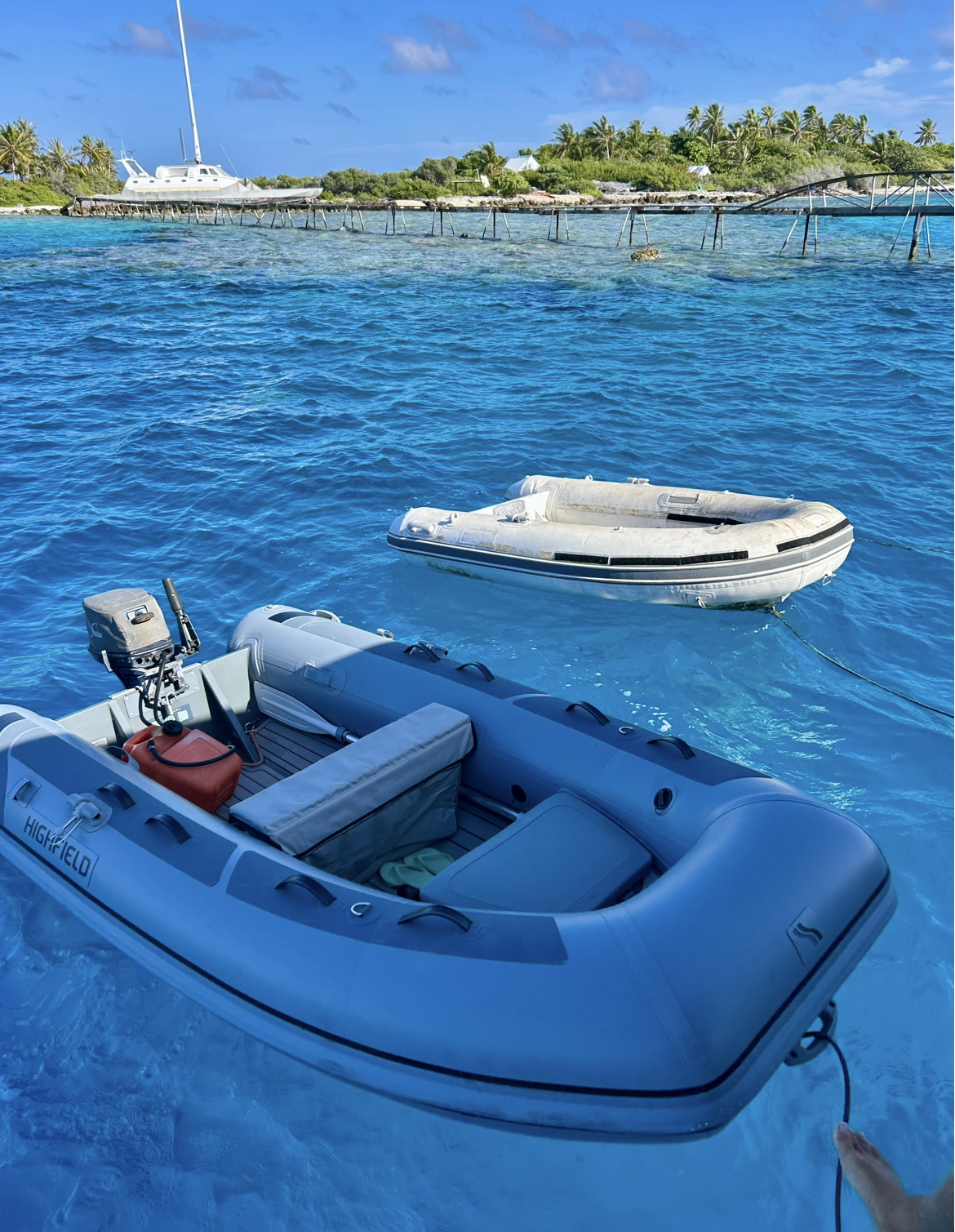
We stopped in Rangiroa en route, where we sipped sundowners as dolphins frolicked in the crashing waves of the outgoing current and ate our body weight in fresh fish & vegetables while locals treated us to traditional dancing and Tahitian tunes. Then it was time to re-provision and collect our new dinghy from the inter-island supply ship.
As we were getting ready to set sail for Ahe, we got a message from Josh at Kamoka. “There is a catastrophic fuel shortage in the atoll.” Casp & I thought this was the start of the fuel crisis rippling its way across the ocean, but it’s actually due to a delay of plastic fuel barrels being delivered to Tahiti.
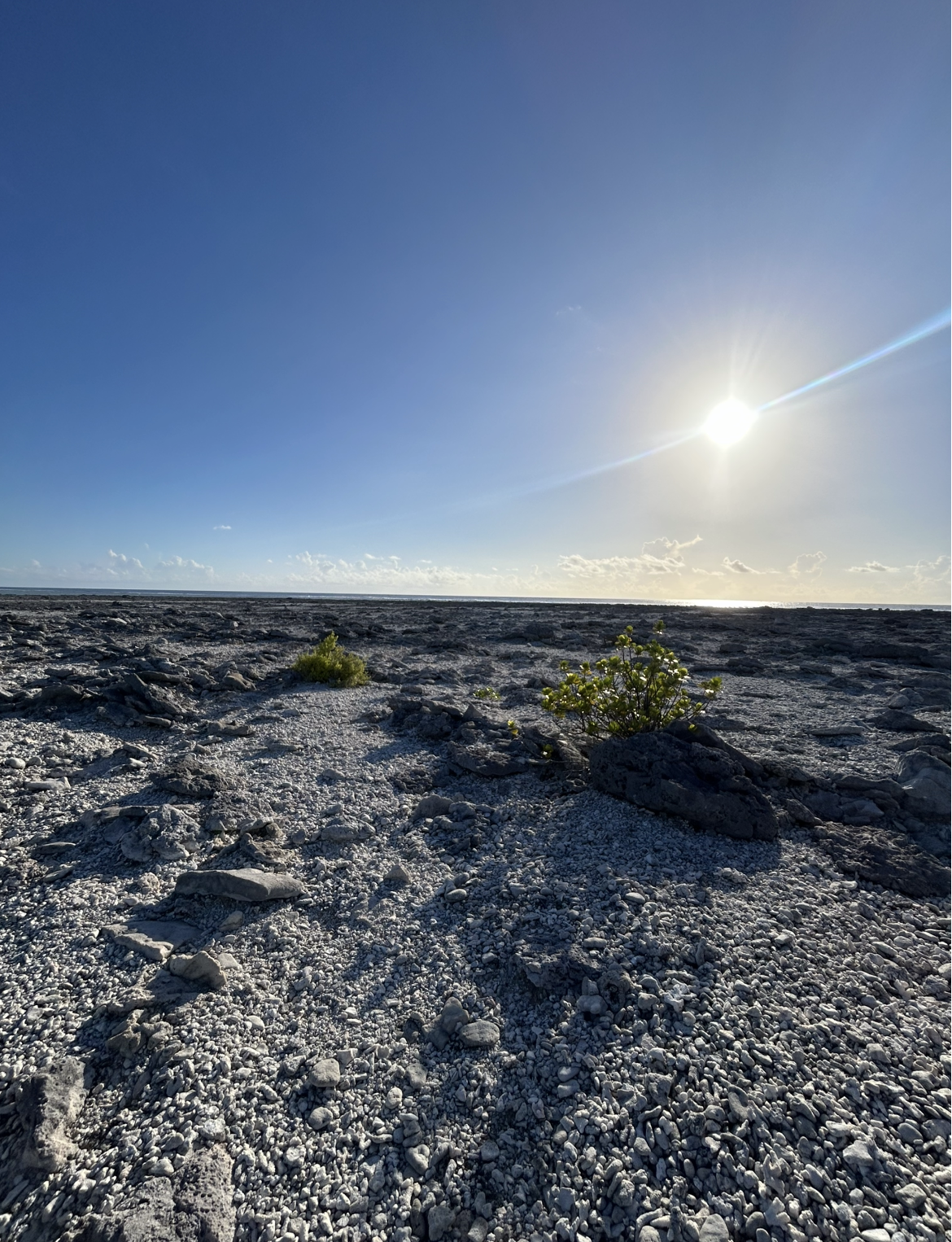
Ahe is a mid-sized, ring-shaped coral atoll formed by numerous low-lying, non-connecting islets called motus. It’s 23 km long by 12 km wide with a 138 km² lagoon and just one navigable pass, Tiareroa. It has coconut plantations, pearl farms, and a small population of around 550, mostly in the main village of Tenukupara.
Due to its size and small population, there is no petrol station on Ahe, so the locals rely on fuel brought in, in 250l barrels, and when there are no barrels, there is no fuel. Unfortunately, due to the harsh conditions, rough handling, unrelenting heat, and humidity, the barrels don’t have a very long life and apparently aren’t reused. This is mainly due to strict regulations to try to avoid fuel spills in an already vulnerable ecosystem.
Luckily, we had two empty 55l fuel containers onboard, and Rangiroa, as the largest atoll in Polynesia, has a gas station, with plenty of petrol.
Armed with fresh supplies, 2 dinghies, and 110l of petrol for Josh, it was time to head off through the much calmer dolphin pass and start our 140 nautical mile, upwind sail. We tacked our way there, finally arriving after a 26-hour, slightly lumpy sail.
We spent our first night anchored up outside Tenukupara village, went ashore to stretch our legs and take in the sights. Our 4.5 km walk took us past all the town had to offer, including 2 grocery stores, one closed and the other incredibly lightly stocked, despite the supply ship having just been in. We also took in the sights of the solar plant on Tia Kumi Kumi motu, which powers the entire atoll, with its 964 solar panels.
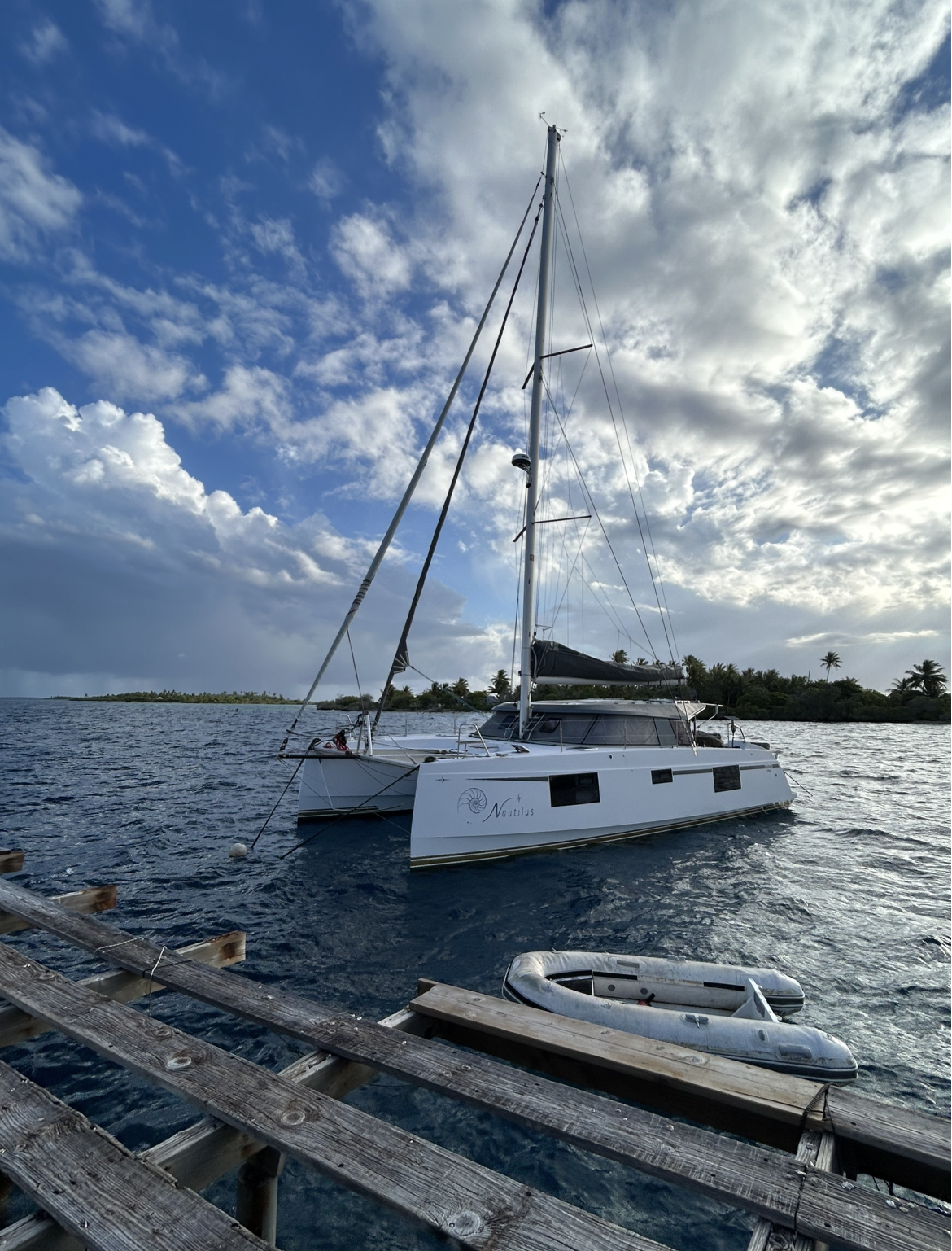
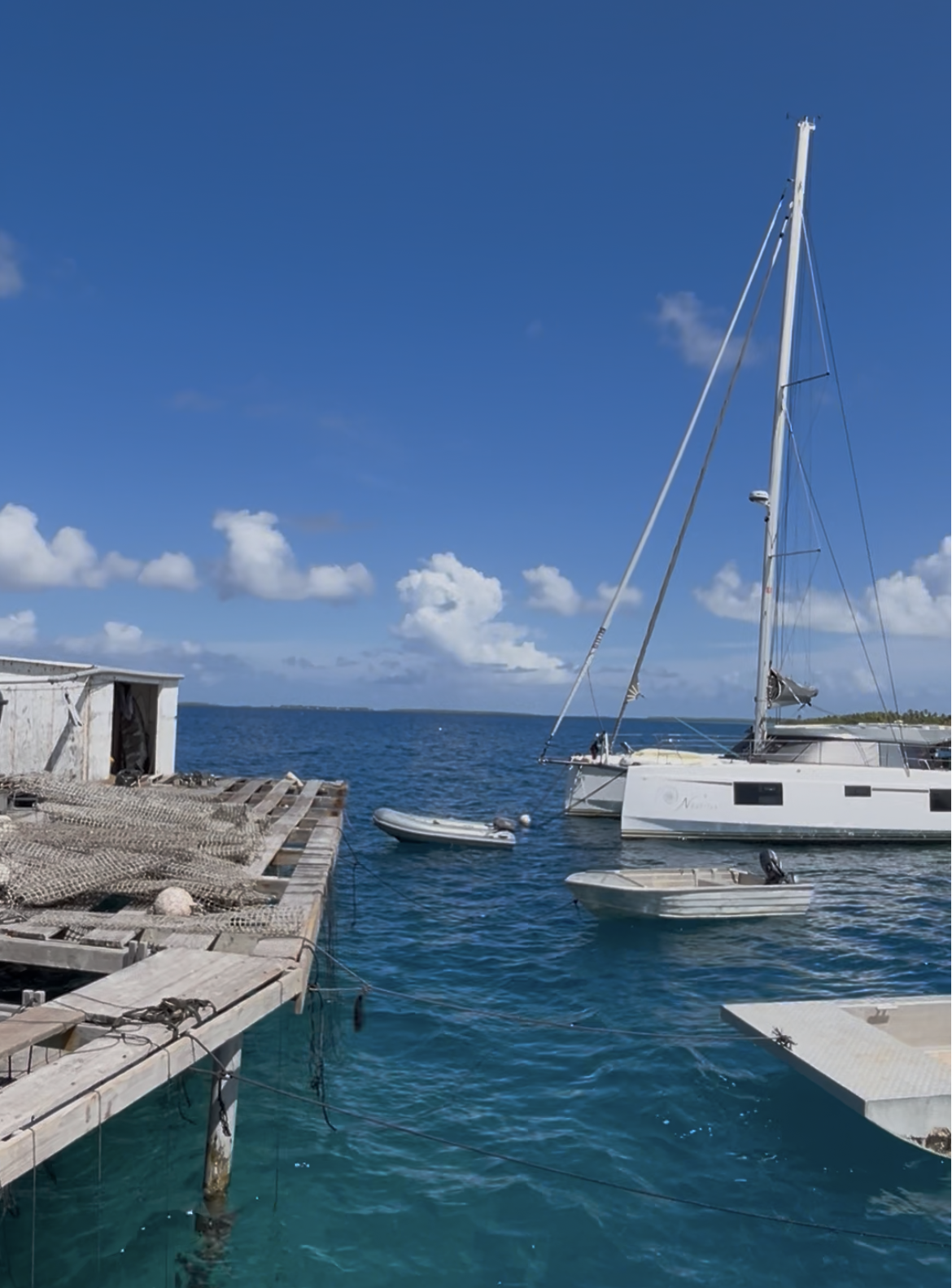
Finally, it was time to head to the 2 motus and endless reefs that Kamoka Pearl calls home. Josh met us a few metres out from the farm building to help us navigate the reefs and get tucked in. They have one mooring ball and a few sunken stern lines, so we were locked in tight, which was great as there wasn’t room to swim a cat; we could just about step off Nautilus right onto the dock.
We were promptly invited to join the crew for a delicious lunch of lentils and locally caught reef fish. Knowing that fuel was on the way the guys were able to head out through the pass to the fresher ocean side of the atoll to spear-fish and top up their protein supplies. We were given the low-down of the island and encouraged to head out for an explore.
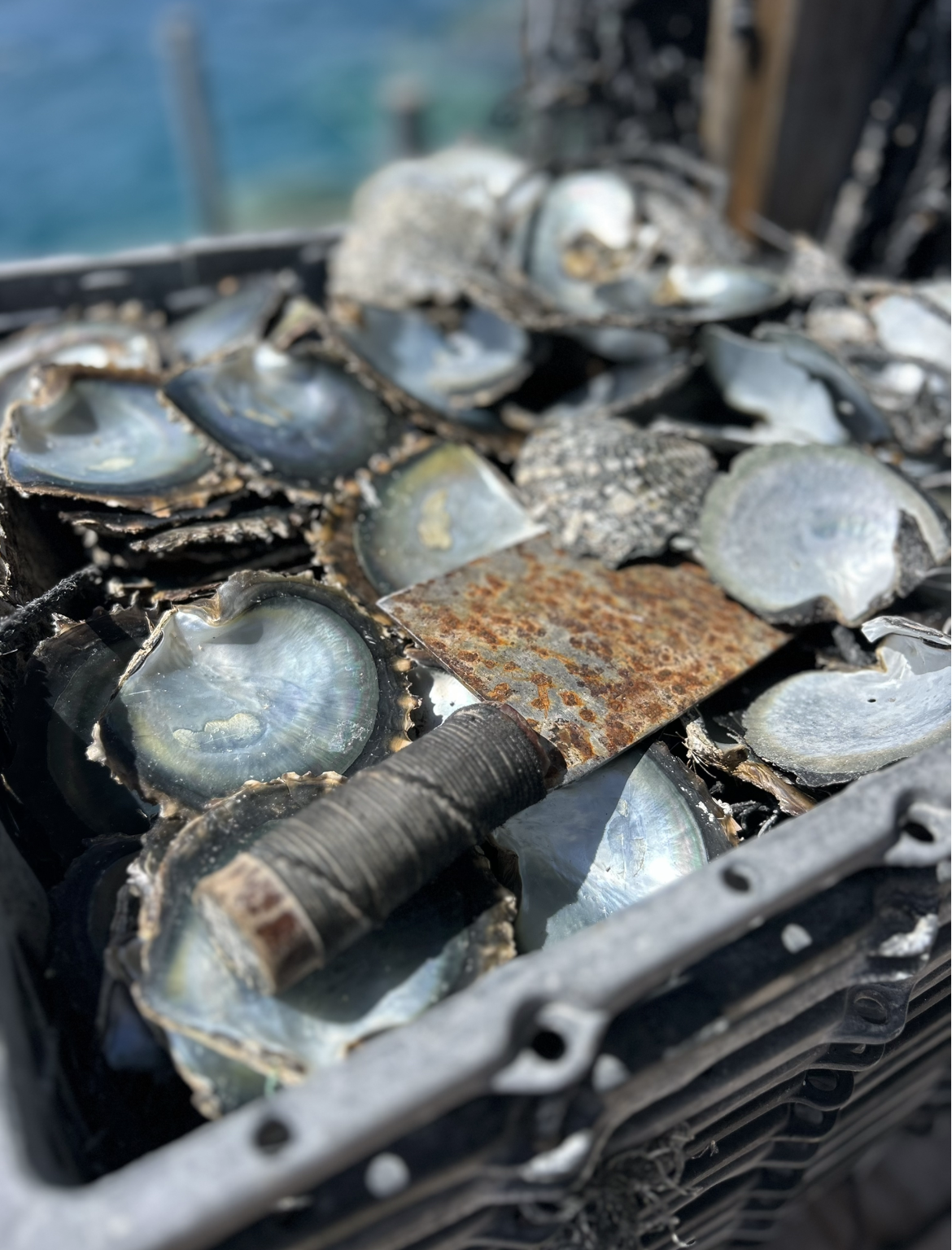
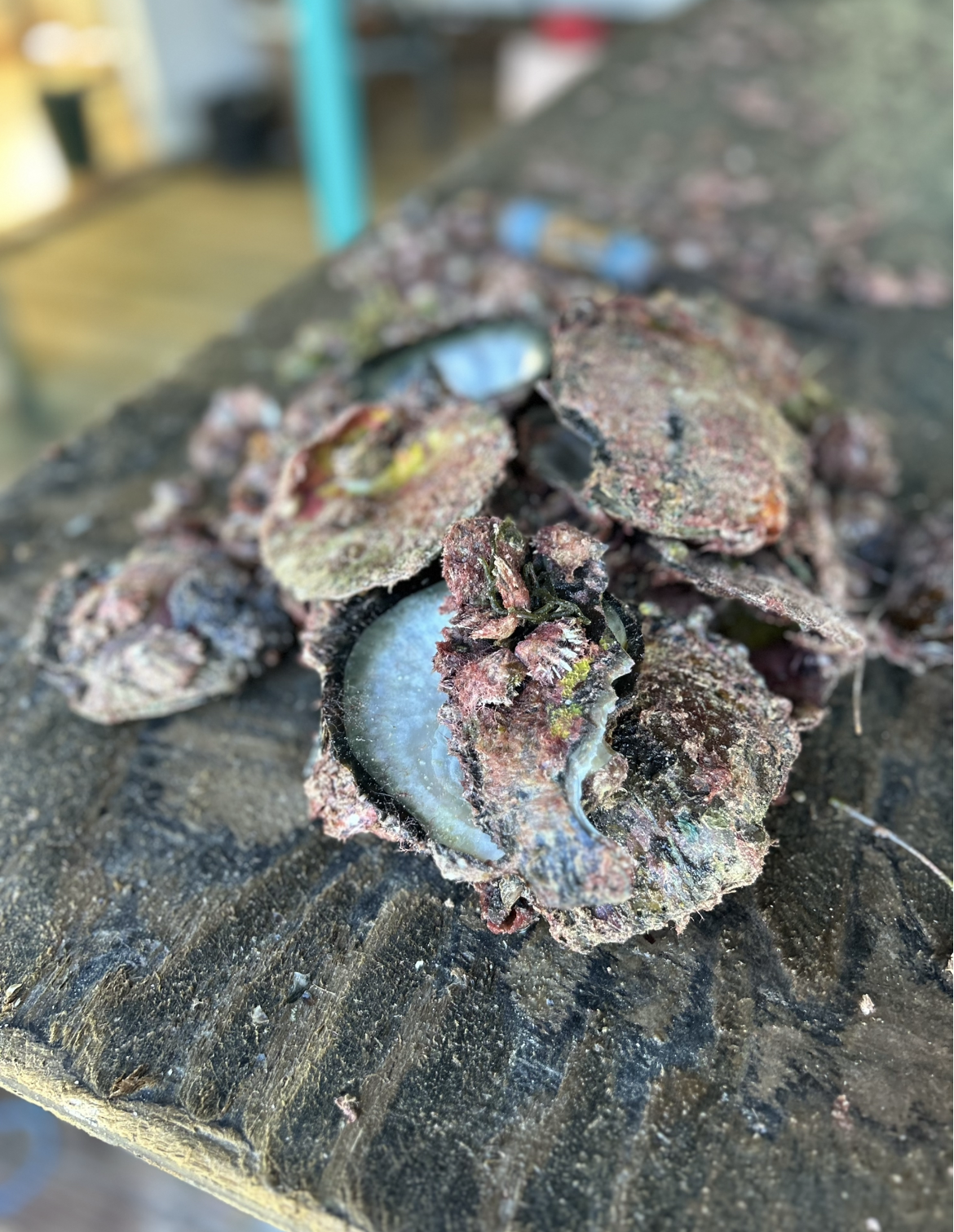
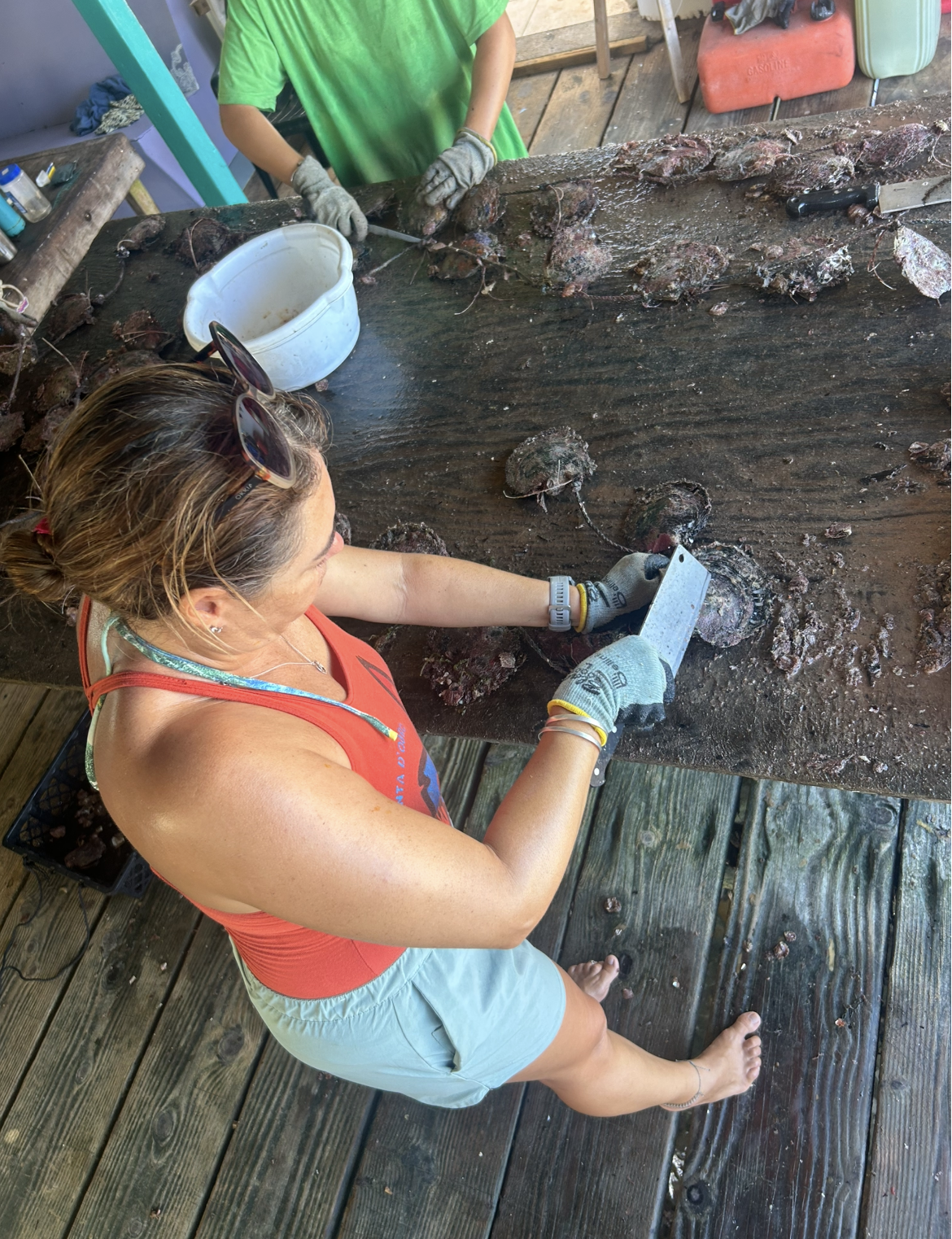
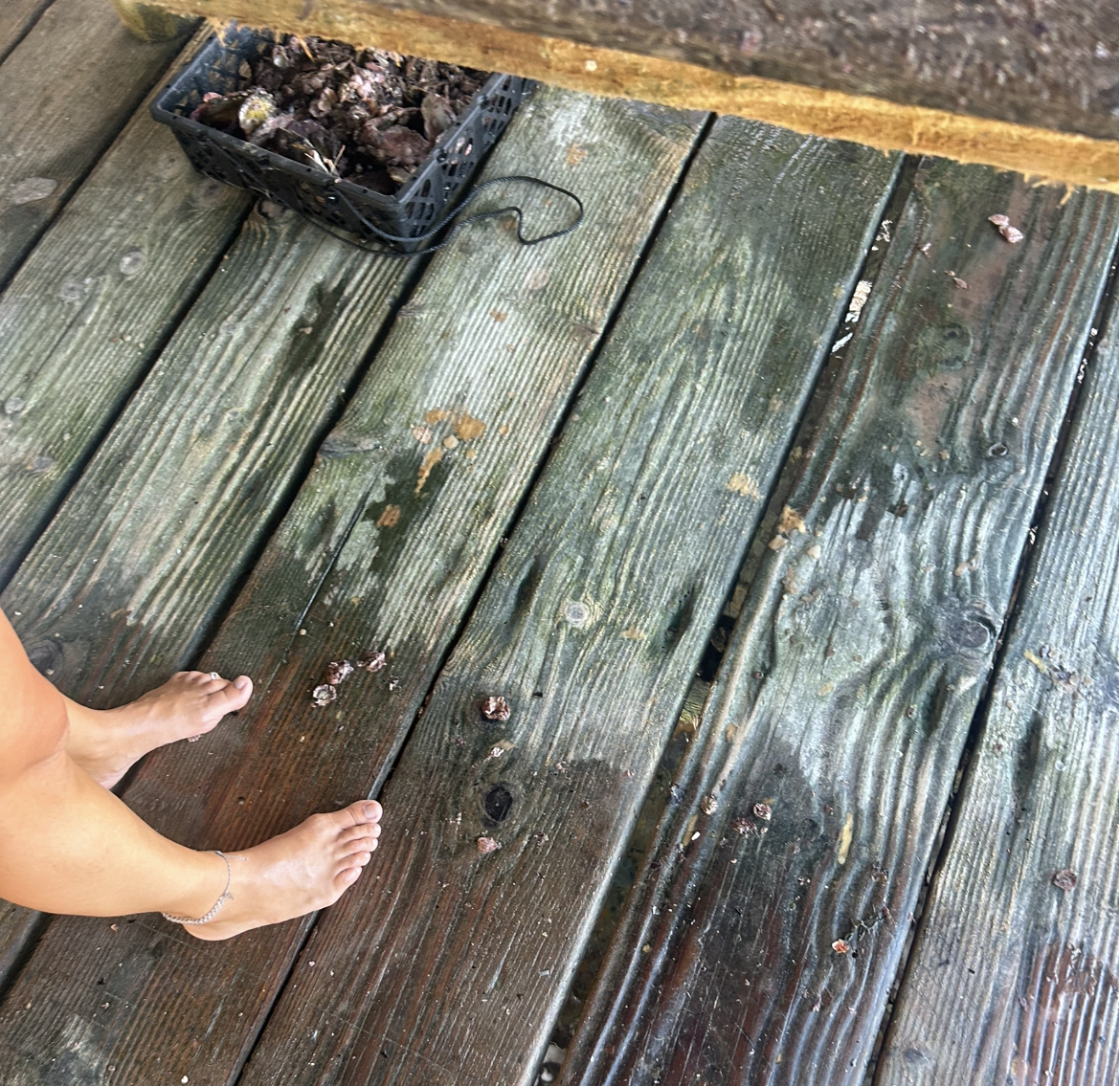
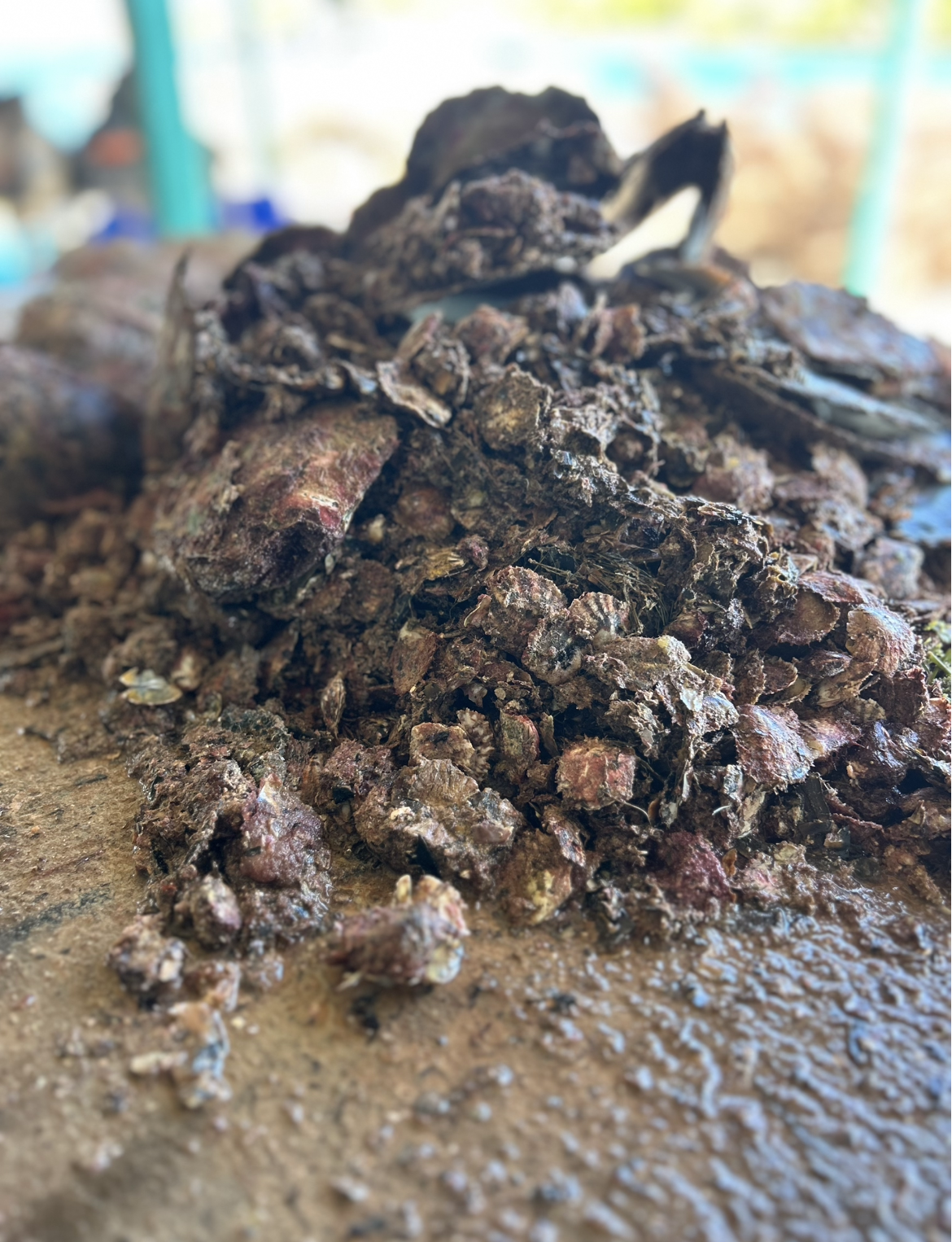
Early the next morning, Josh invited us to play oyster farmers for the day. Casp had some boat jobs to do, but I jumped at the opportunity. Those of you who knew me pre-sailing, know that while I was never afraid of getting my hands dirty (I grew up in Africa, after all), I’d be getting them dirty in my very own pair of freshly washed, perfectly sized gloves while wearing my suitable outdoor shoes. Fast forward 4 and a half years of salty ocean life, and you will find a very different lady, as I grab a pair of well- worn, very fishy, wet gloves from the rack, slipping them on with only a mild moment of hesitation. I take my place at the cleaning station, bare feet finding a clear space among the shell detritus and prepare for my lesson on oyster cleaning.
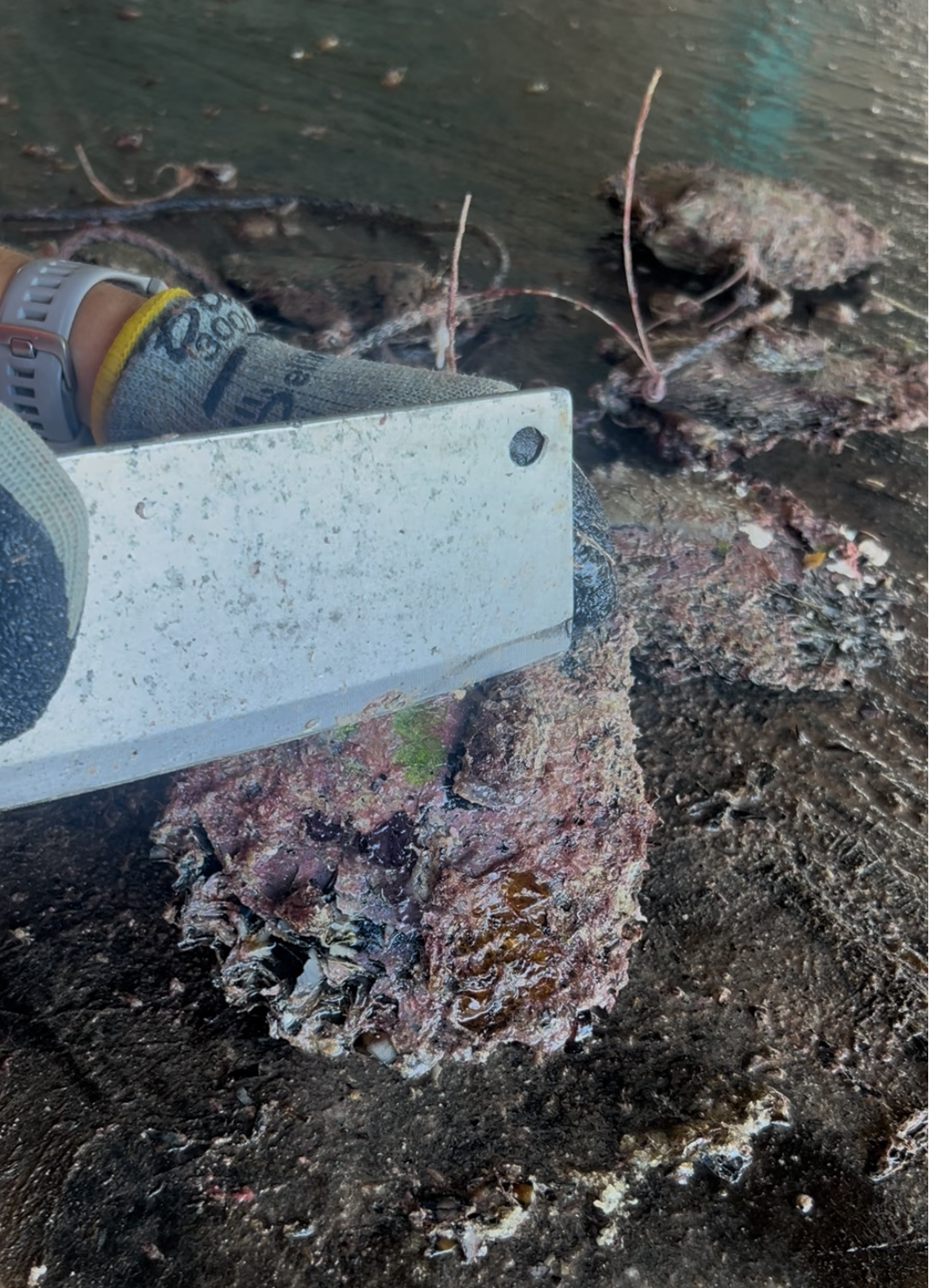
Watching Penelope, a beautiful 20-something from Madagascar with dreams of owning her own pearl farm, expertly and rather aggressively scraping off the marine growth that saps nutrients from the oyster and thus reducing the quality of the pearls. It was finally my turn; cleaver in hand, I very tentatively brought it down onto the oyster shell and ping… fuck, here I am being super gentle and I manage to break the thing. Turns out it was only a bit of new shell growth, a sign that the oyster is happy, healthy, and growing quickly; luckily, removing this type of shell doesn’t have any negative effect on the oyster. After a few more confidence-inspiring words and understanding which coatings of parasites are ok viruses which ones harm— red-ish pink is ok, white not great, I finally got the hang of things and spent the next 6 hours working my way through 150–250 oysters, with a break for another delicious lunch squeezed in there somewhere. It was an utterly amazing experience, and truly one of the best days of my life. That evening, as my tired body and slightly aching claw hands dried off to sleep, I was very much looking forward to what day 2 of pearl farming would bring.
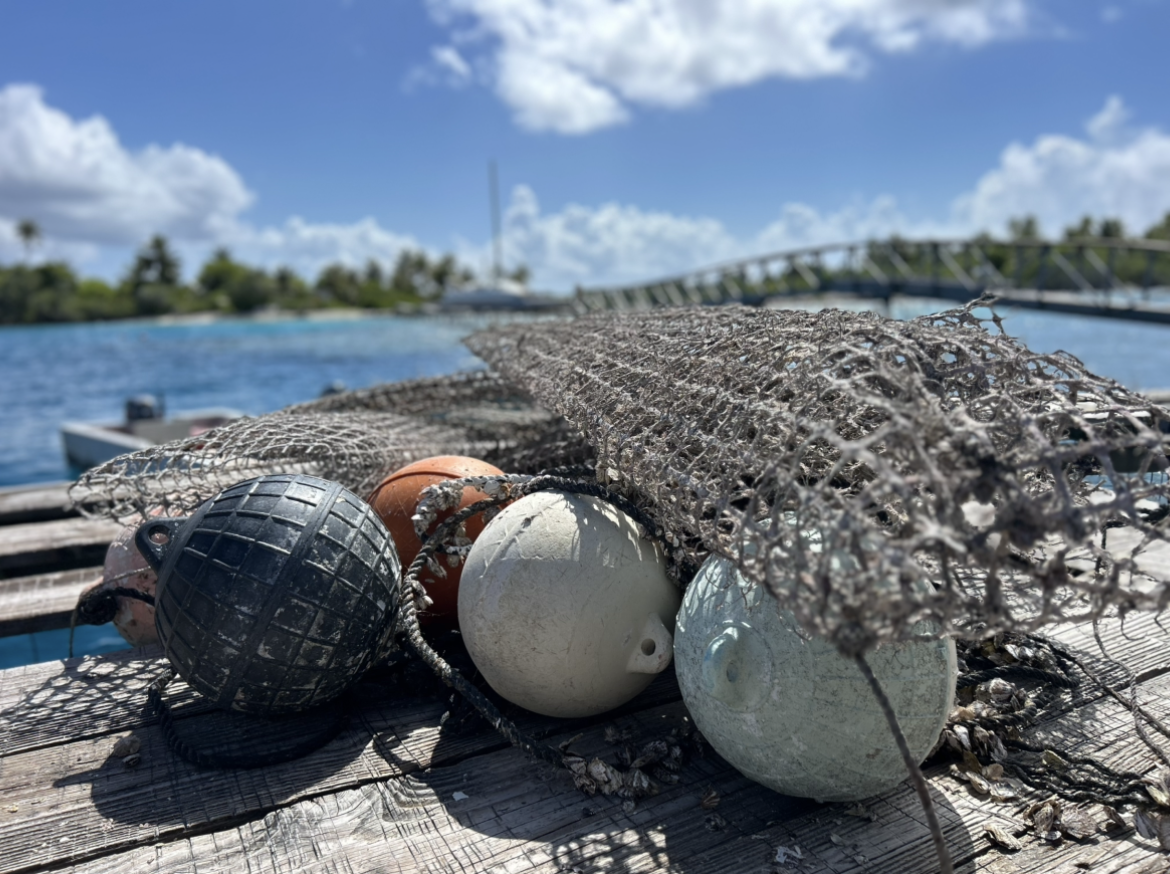
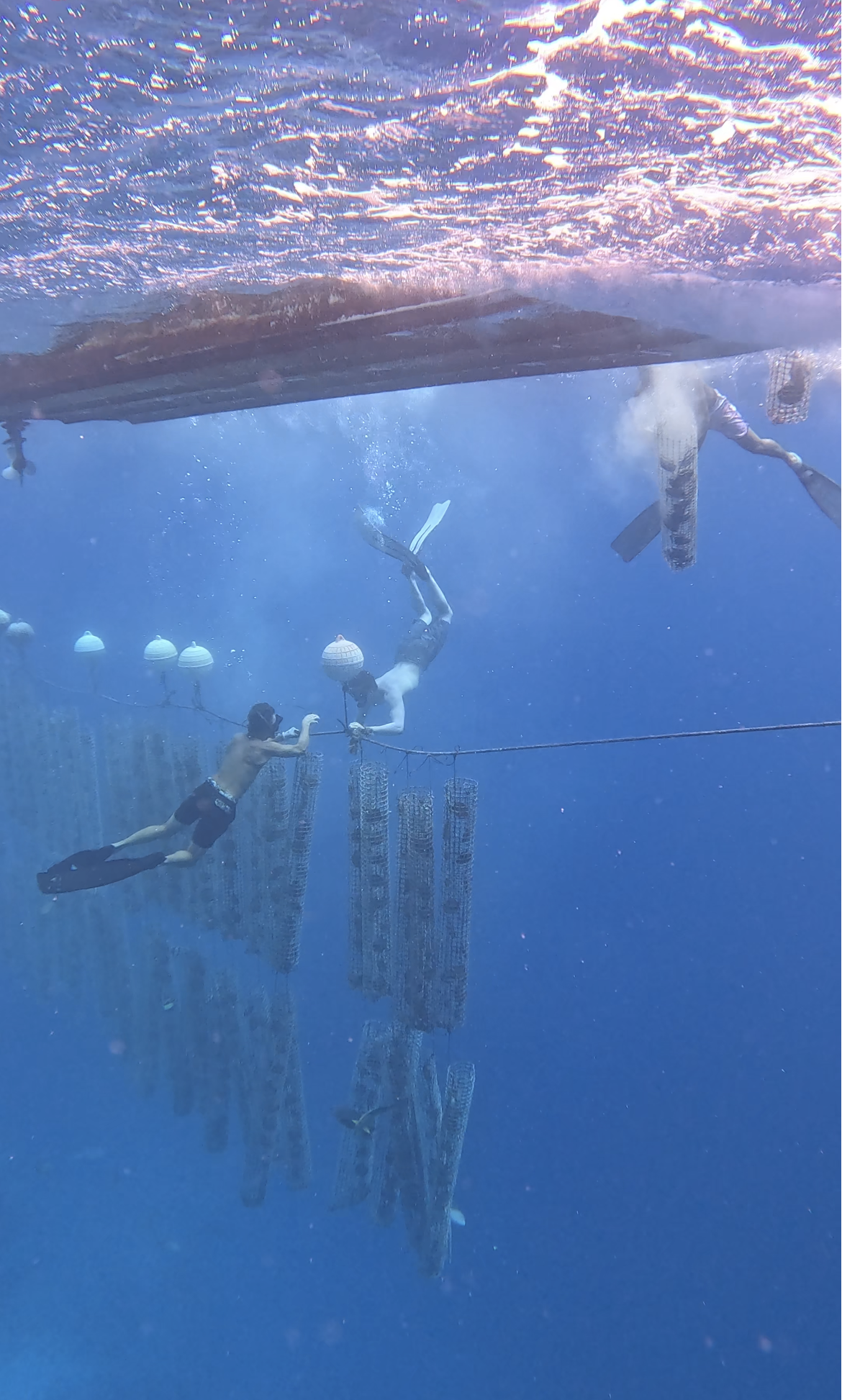
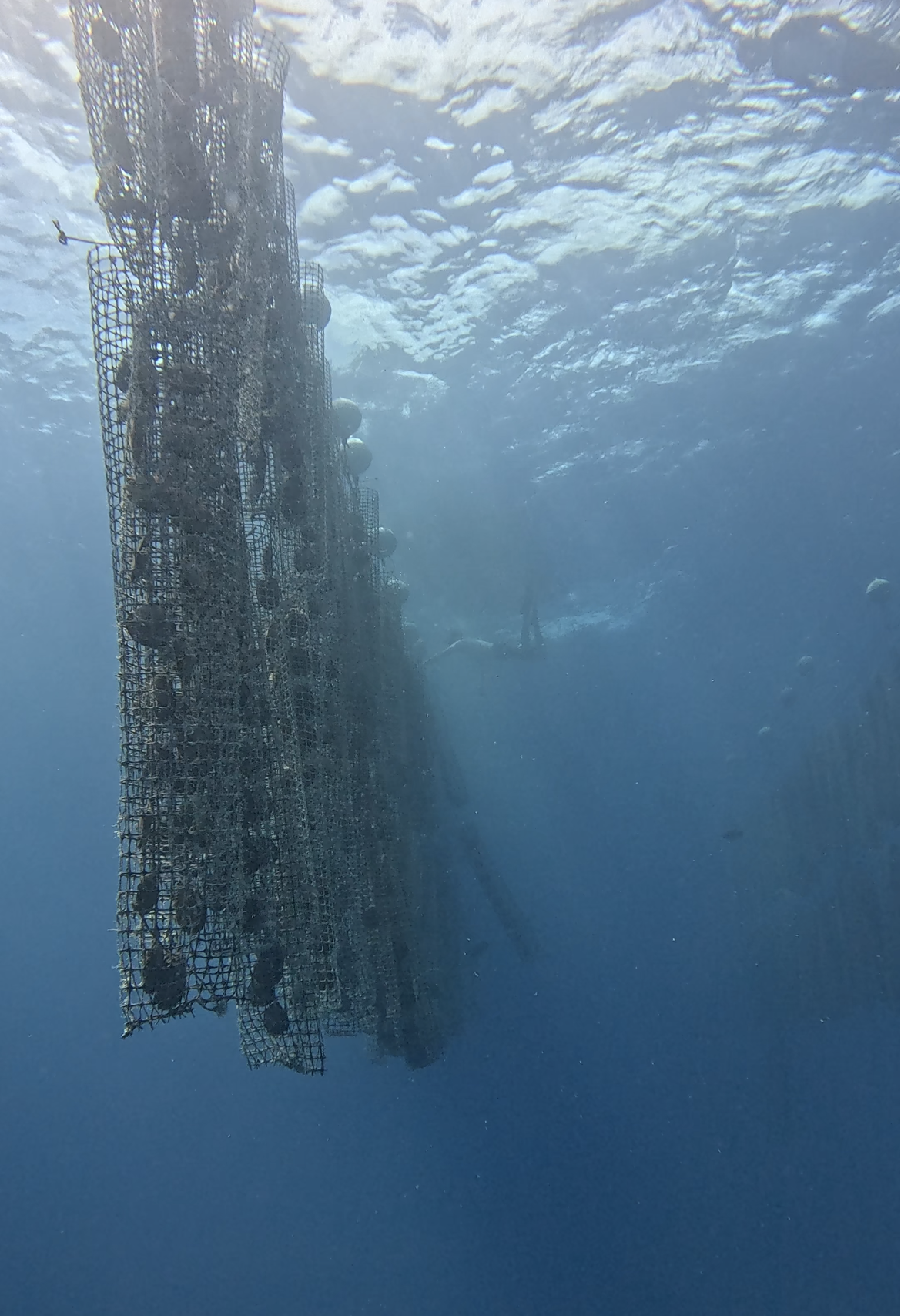
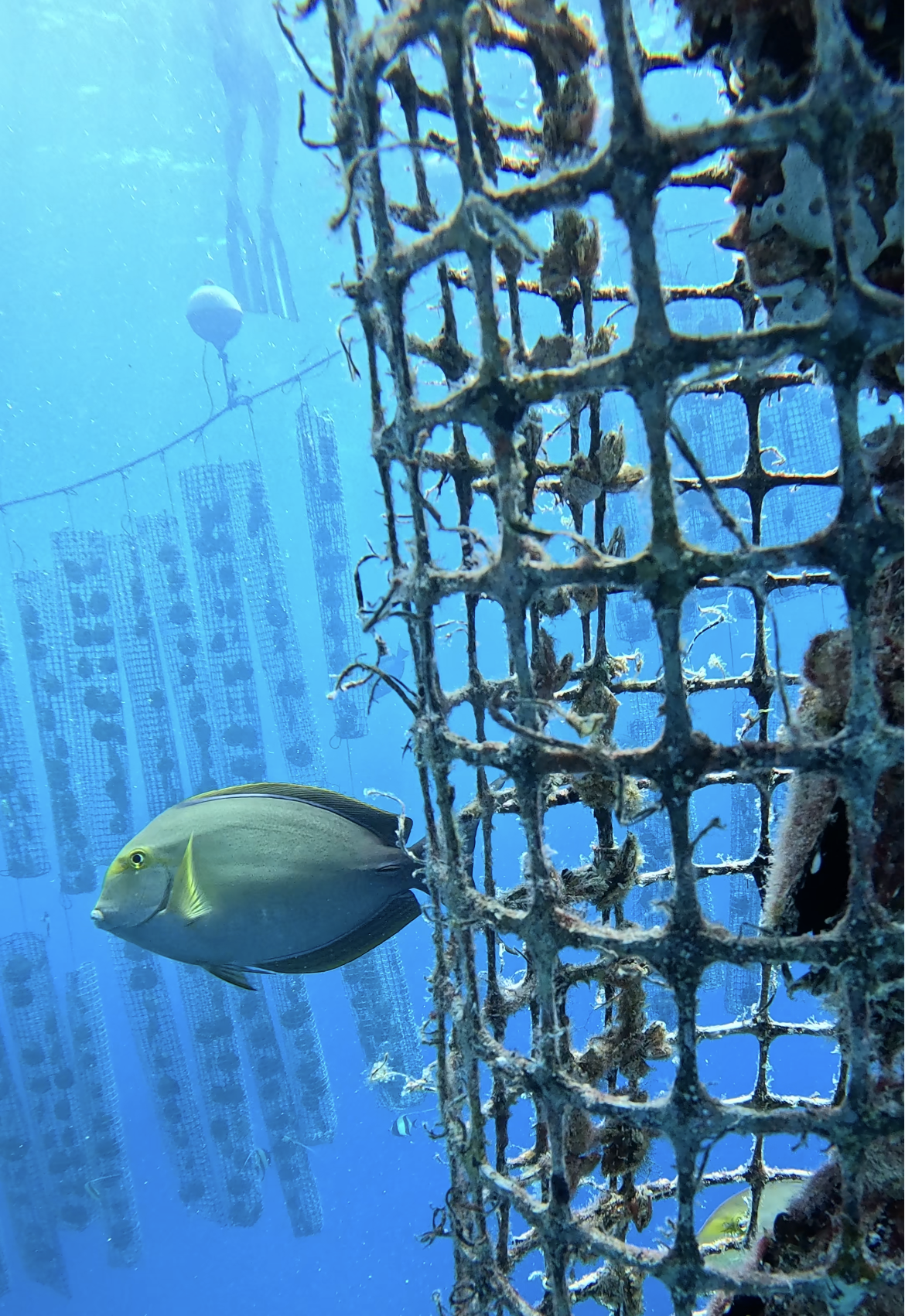
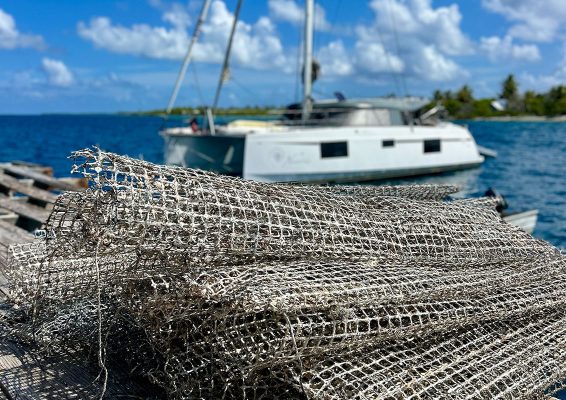
Fully expecting and rather looking forward to another day of shell cleaning, even though my hands still ached a bit from yesterday, I was a little disappointed to find that we had worked our way through the oysters that had been brought to the shallows for cleaning. That did mean something even better was on the cards: putting the oyster baskets back on the outer reef where the growing fish population helps clean the shells of the persistent growth that comes from a healthy, vibrant ecosystem. After almost a year in the Tuamotus, we have swum in our fair share of inner atolls, and while the passes are extraordinary with almost endless visibility and amazingly diverse fish life, Inner atolls tend to be quite the opposite; over-fishing and extensive, aggressive pearl farming have left many atolls struggling. But here, thanks to Kamoka’s revolutionary approach to farming,taking a much more labour-intensive, hand-cleaning and open-basket stance rather than the traditional pressure washing and closed baskets, has really paid off. You could already see from the surface that the water was much clearer, but as we dropped in, it was like swimming in a very large, pristine aquarium. The fish life was unrivaled and the coral alive and happily, popping away. And then you notice it: the reason we are here, the empty lines waiting for the newly cleaned oysters to be put back in their home. In the distance, you can see the other 75,000 oysters in various stages of growth and pearl development; it’s like nothing I’ve ever seen. Watching Josh and his team masterfully tie basket after basket one-handedly to the lines was entrancing. We could have spent hours there watching them, exploring the reef, and admiring the fish, but the task was done and it was time to head back to base.
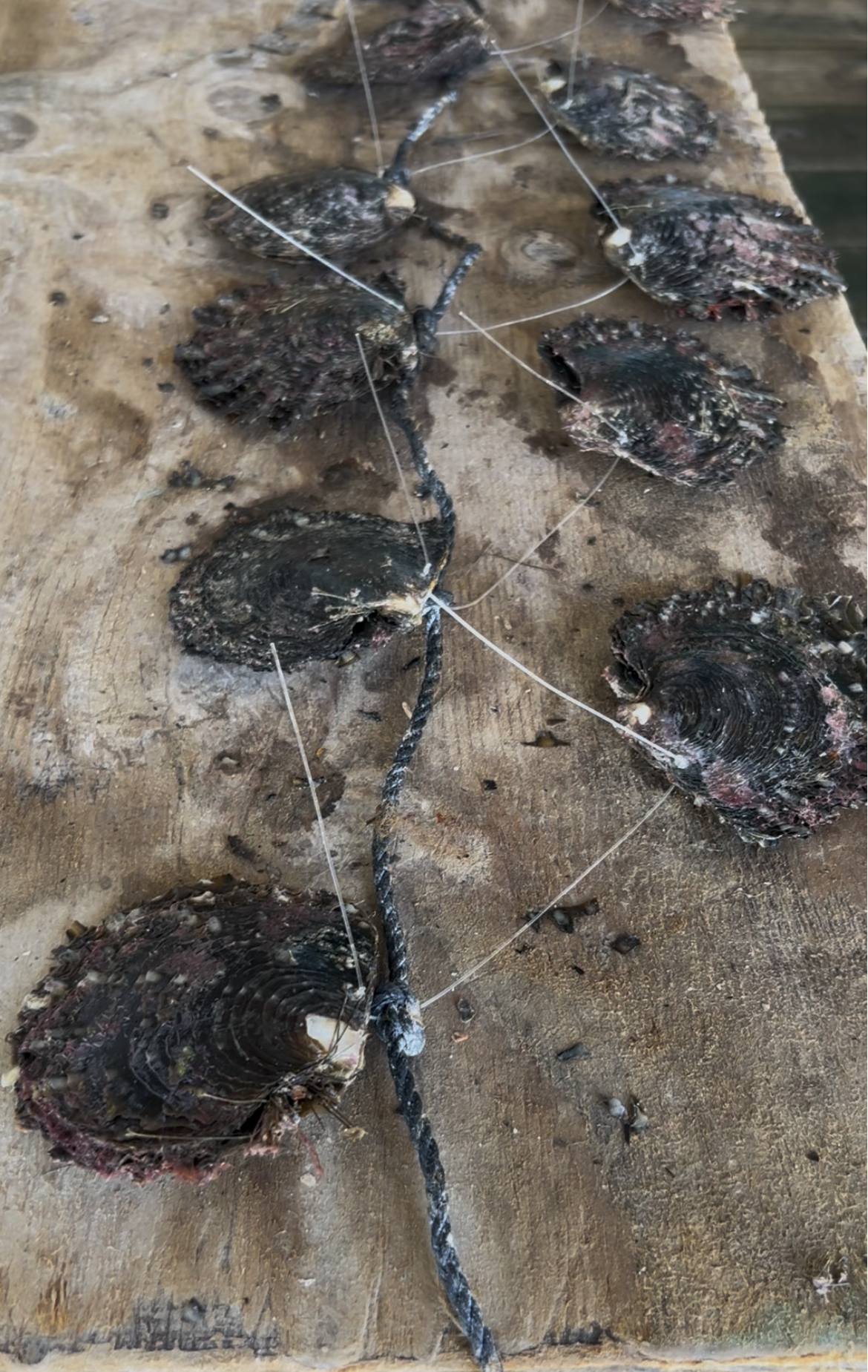
Oysters start their lives as free-swimming plankton. Those that aren’t gobbled up by manta rays and other plankton eaters have about 3 weeks to find a surface to attach to before their shells become too heavy. These mini, vulnerable oysters often seek refuge with the adults; they are collected and placed on growing pads. It takes roughly two and a half to three years for these oysters to become large enough to start producing their very first pearl.
Most salt- water pearls sold today are cultured. Those sweet stories of a tiny piece of sand making its way into an oyster’s fleshy bits and being coated with years of shell to fight off the irritation, while that may occasionally happen, they are rarer than rare and mostly just that: stories. Can you imagine the business plan: so I’m going to tie a few thousand oysters to a reef and really really hope that a bit of sand makes it into each and every one and calls it home…. The reality is much more time-consuming and still not guaranteed.
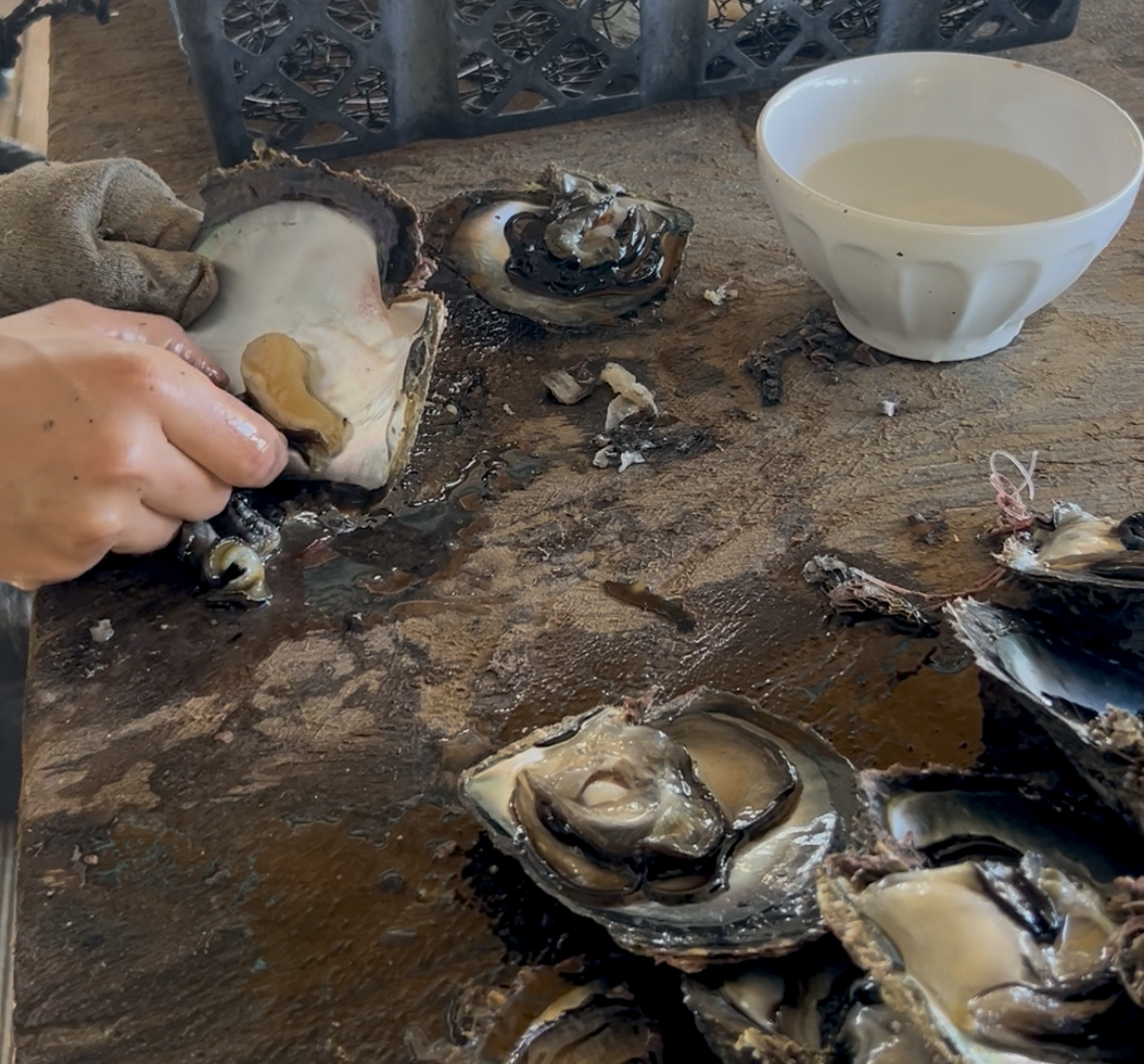
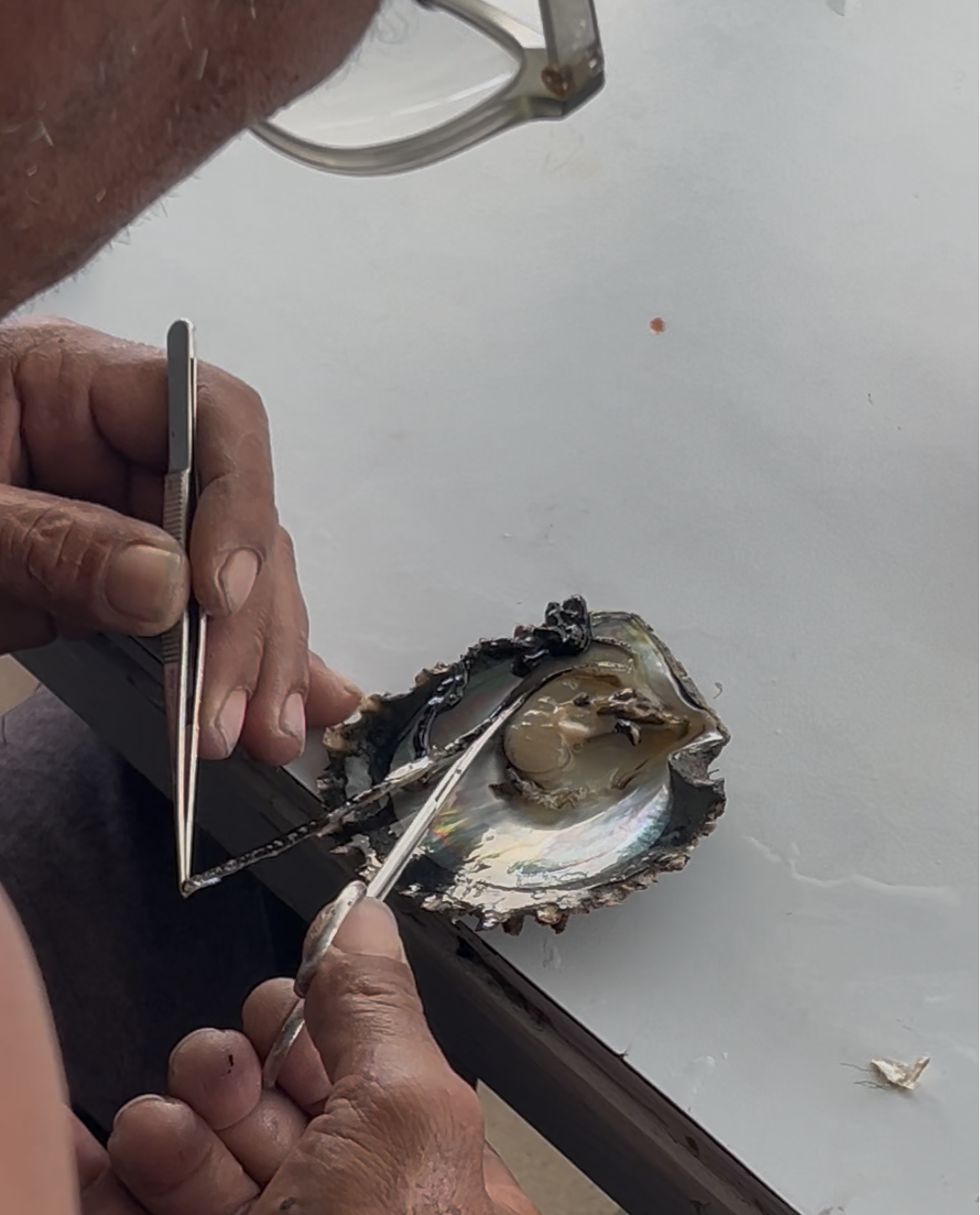
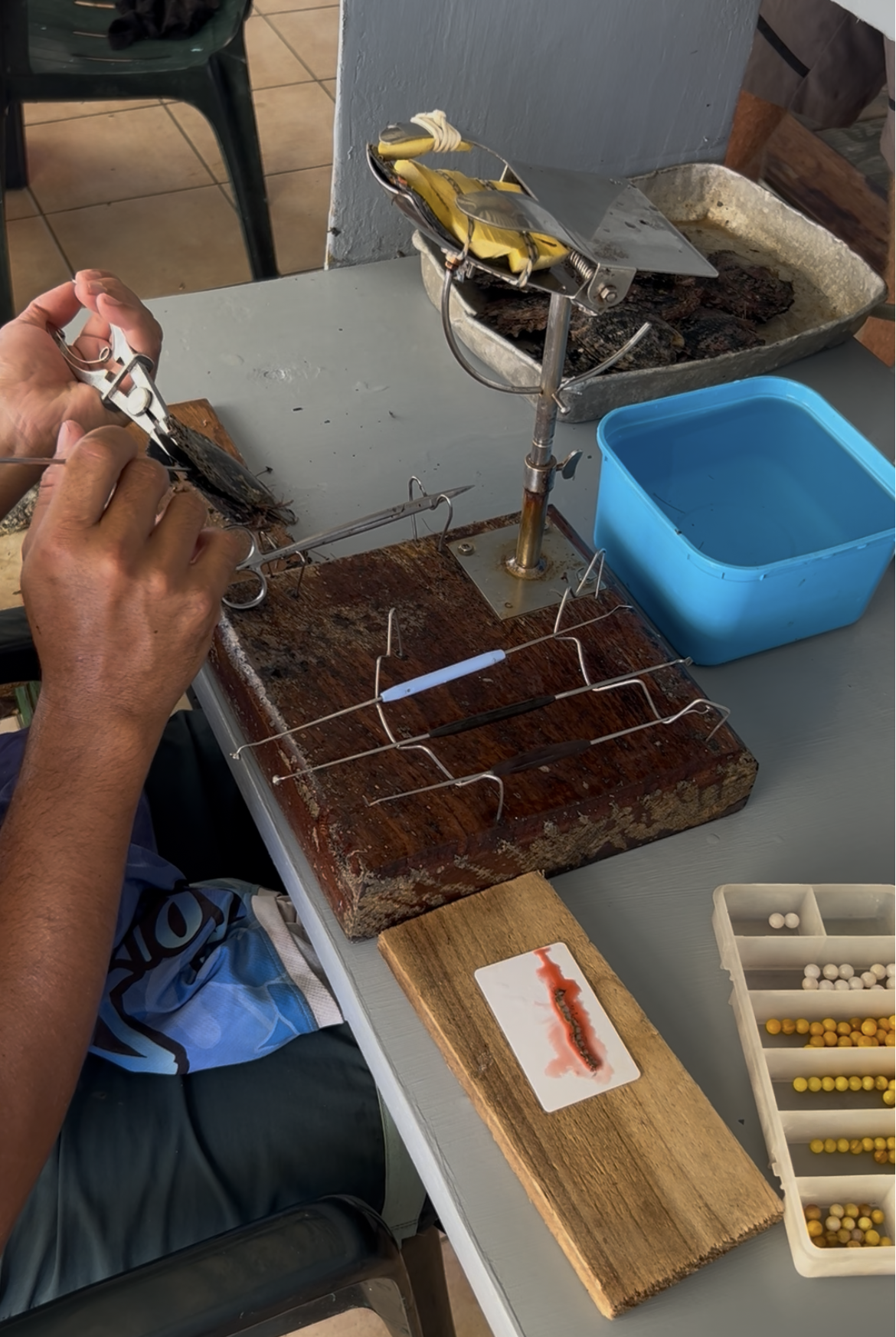
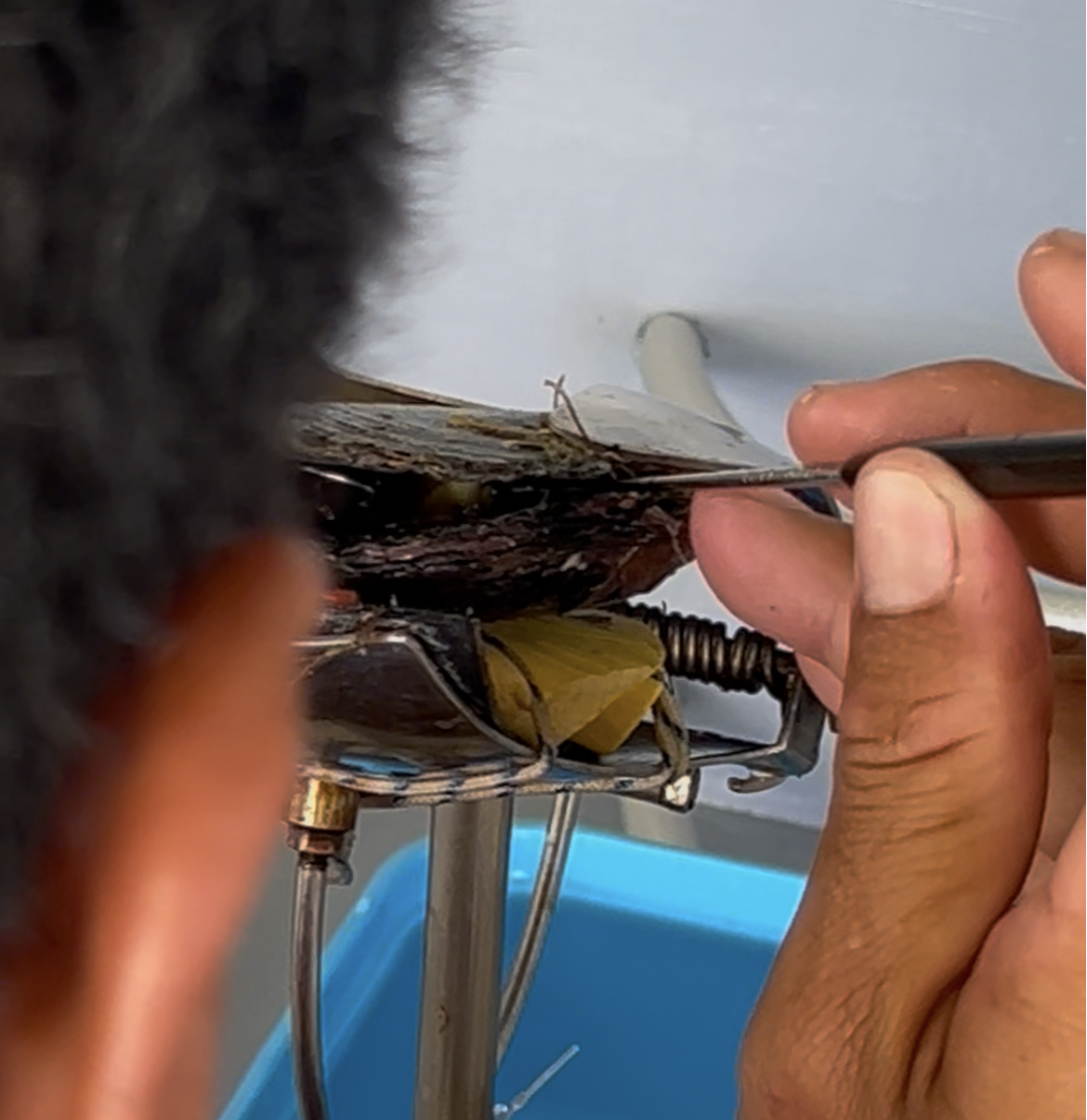
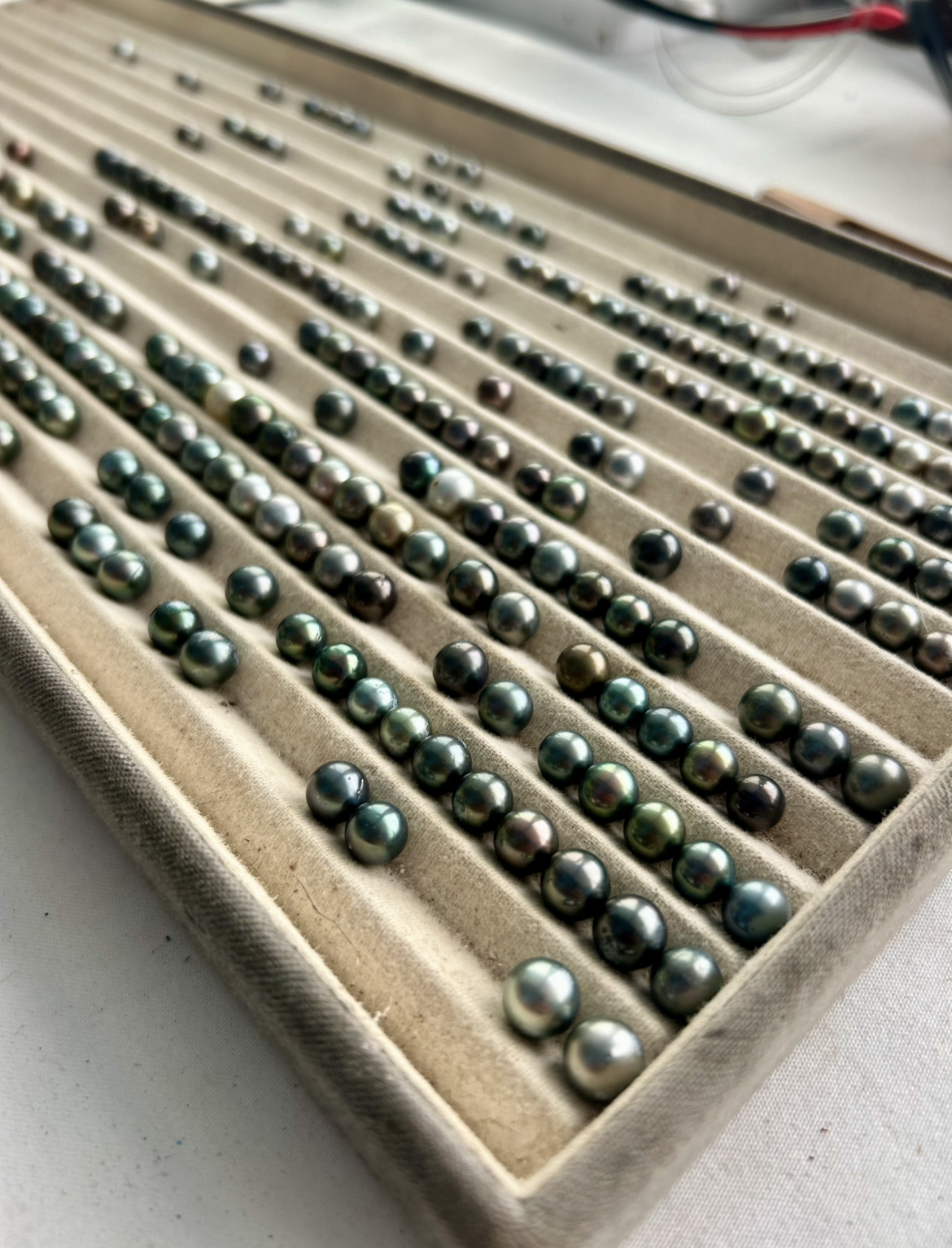
First: the colour Tahitian pearls come from the black-lipped oyster and are often referred to as black pearls, though this is a misnomer. They are actually dark-toned and come in a range of colours, from silver to blue- grey and deep aubergine to the famously prized “peacock” a multi-coloured iridescent with green, purple, and rose overtones. The colour comes from the mantle (the black- lipped organ that secretes the oyster’s iridescent shell), which is harvested from a donor oyster especially chosen for the beauty and colours of its internal shell. Once the donor mantle has been harvested, it is sliced into 25–50 grafting sections.
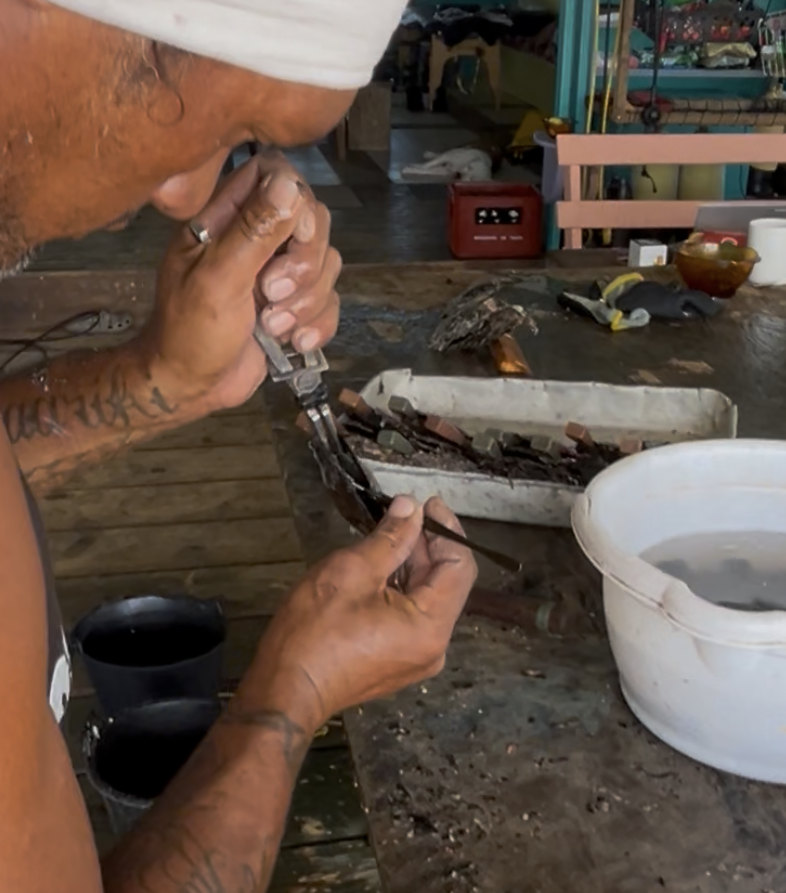
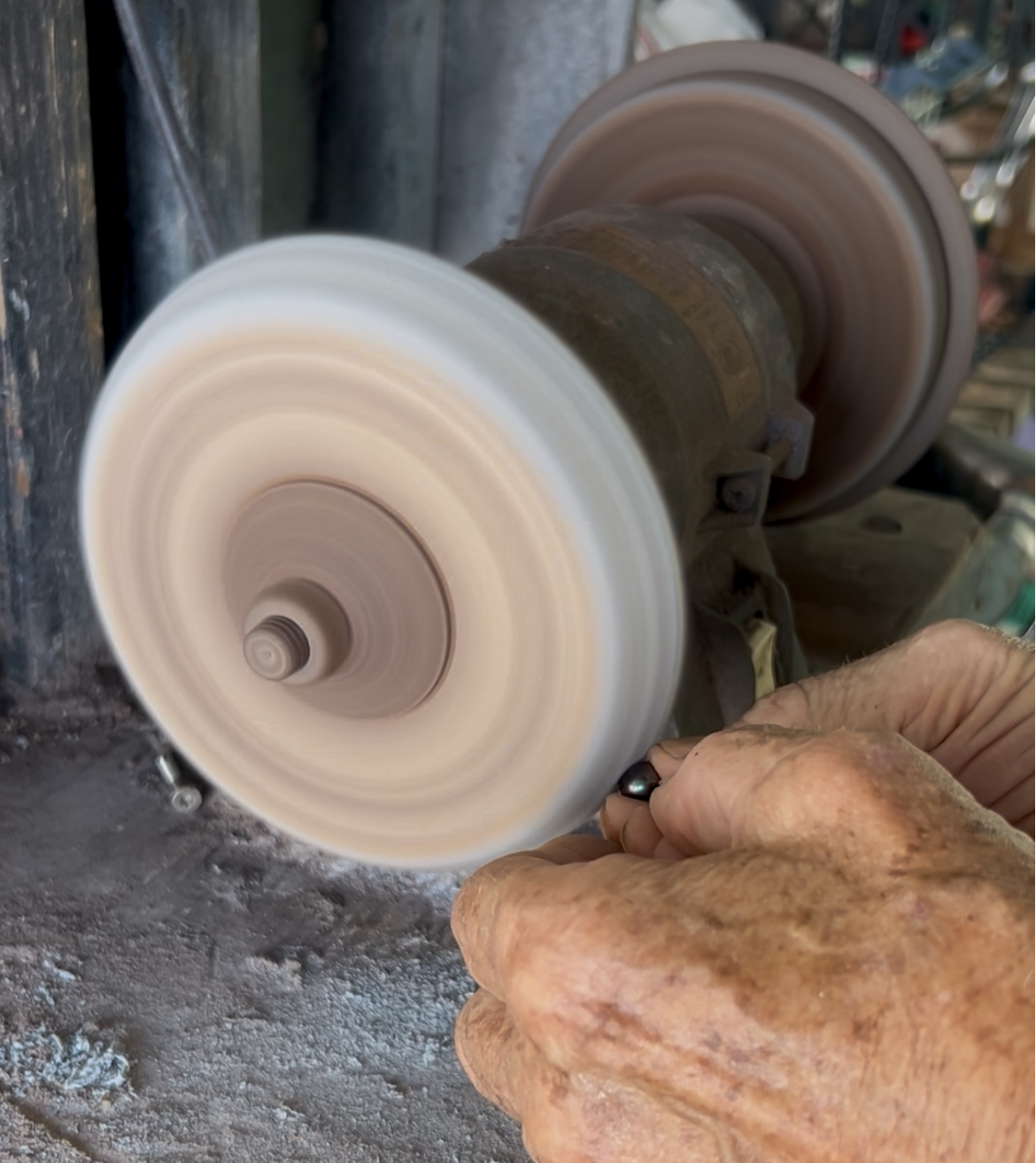
Each oyster has one of these expertly transplanted by a highly skilled pearl technician or grafter, straight into its gonad (yup, you’ve guessed it, straight into the reproductive organ, ouch). The trade calls for razor-sharp tools, antibiotics, an eye for detail, and a very, very steady hand. Now that the colour has been set, it’s time for the pearl itself, through a process called seeding or nucleation. A small, perfectly round, six- to eight-millimetre shell bead, called a nucleus, is inserted alongside the mantle, around which the pearl will grow. Once the grafting operation is complete, the oysters are placed into their baskets and moved to the clear water of the lagoon, where they spend the next 12 – 18 months while the pearls inside them form and grow. After the first pearl has been harvested, a second graft is then performed, this time with a larger nucleus roughly the size of the extracted pearl. Some oysters can make up to 3 pearls, putting their age at close to 9.
Not all grafts are successful; sometimes the oyster rejects the nucleus and instead spends its efforts coating the mantle. These non-nucleated pearls are called Keshis. Often irregularly shaped, with exceptional lustre, the Tahitian keshi is particularly prized for its dark, iridescent colours and baroque shapes.
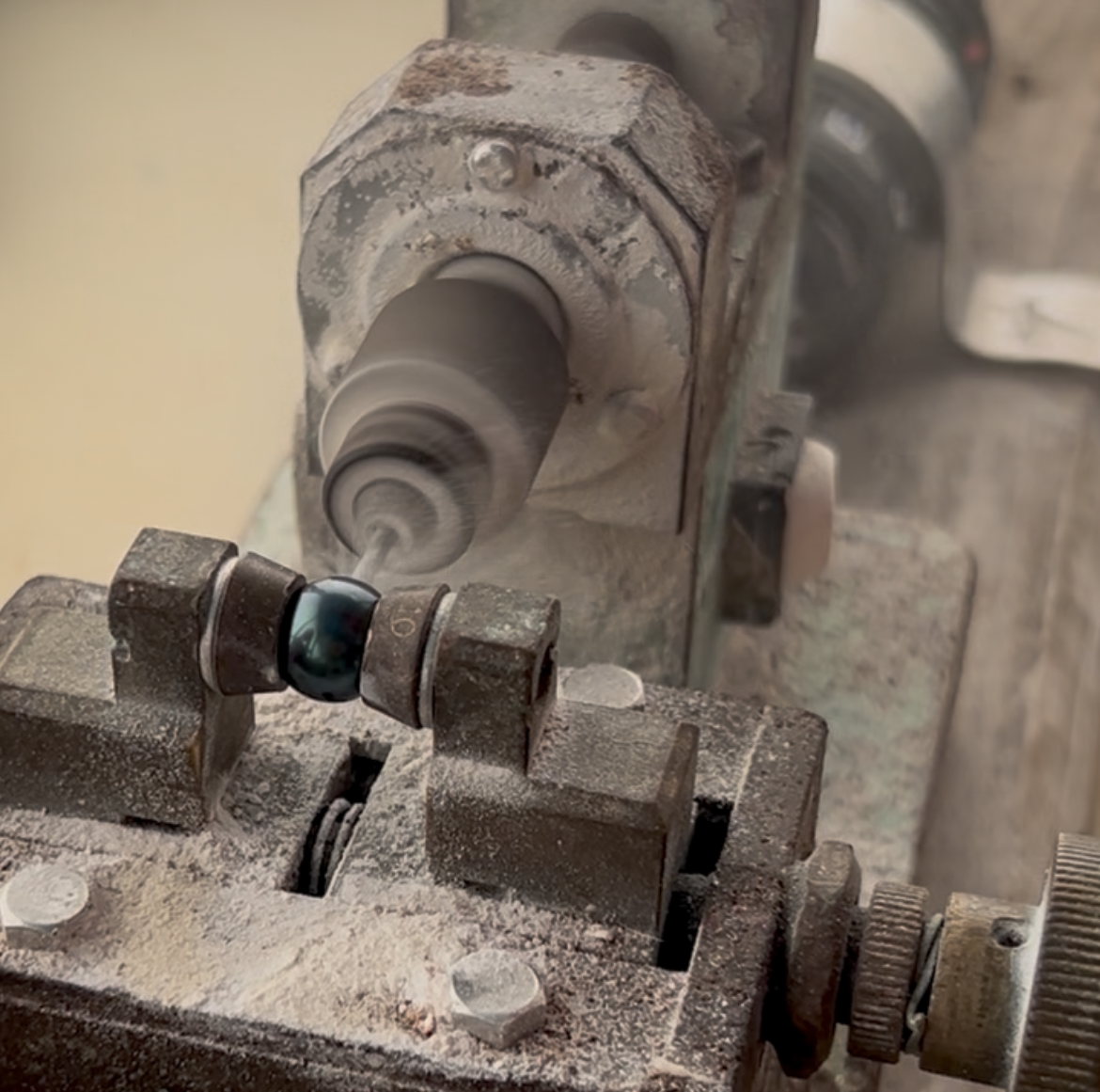
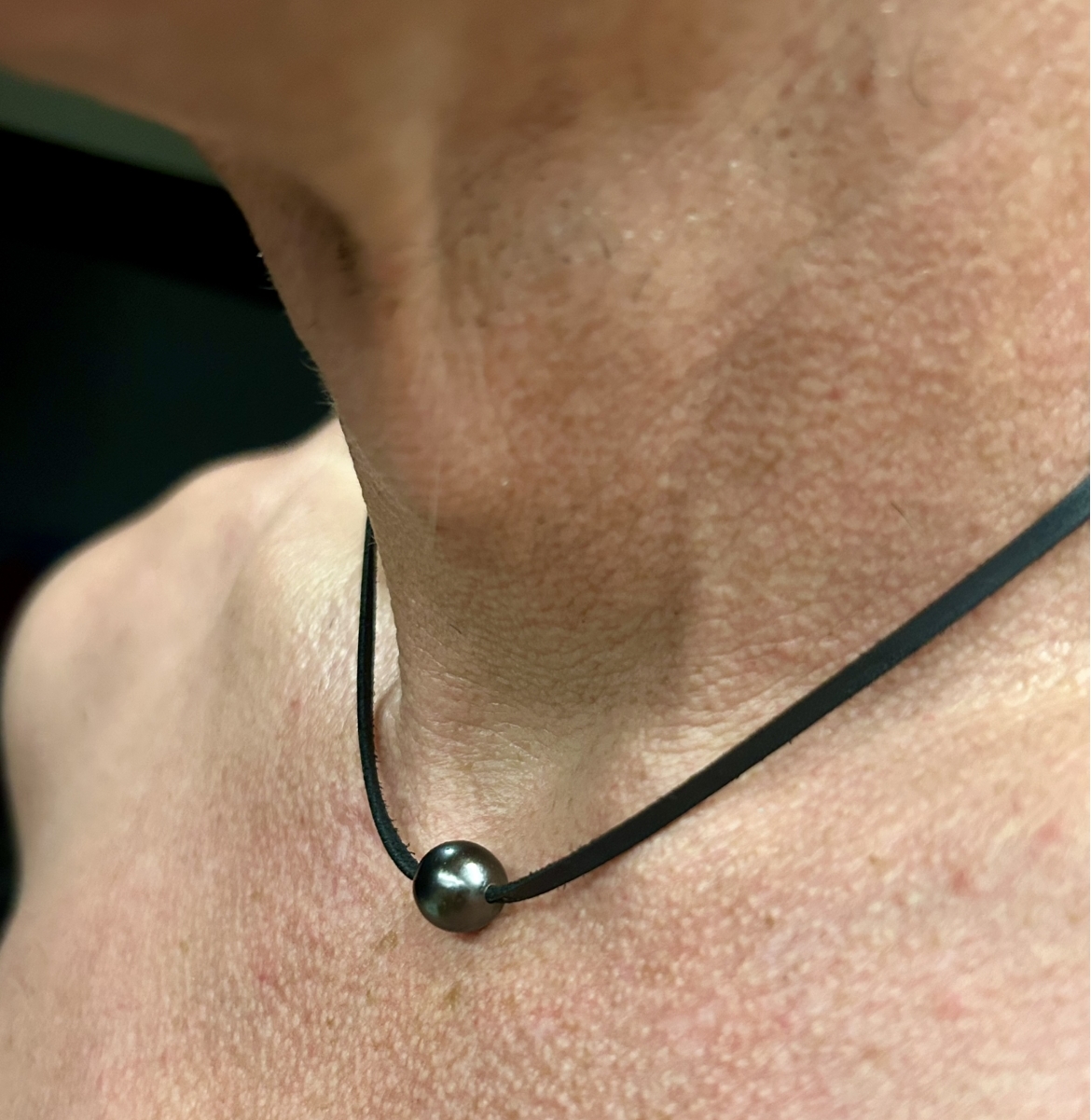
You can’t come all the way here and not leave with some pearls, and it was our turn to look through the tray of beautiful pearls and choose the ones that would be ours. I had decided that I’d really like at least 3 pearls, a larger one to have set as a ring and 2 smaller ones for a pair of simple stud earrings. Caspar wanted one of the traditional Kamoka inspired Mana necklace, a single pearl set on a black leather thong, finished off with the Kamoka logo embossed onto a shell. For me, the choice was agonising and in the end, I walked away with 7 pearls instead of my original 3… can you really blame a girl?
While she works her way to her own pearl farm, the lovely Penelope has started a fab bucket hat business called Wybob. 100% cotton, hand-made in Madagascar — check them out here
If you fancy yourself your very own Kamoka pearl but sailing to the middle of the South Pacific isn’t your jam, you can cyber sail over to their website