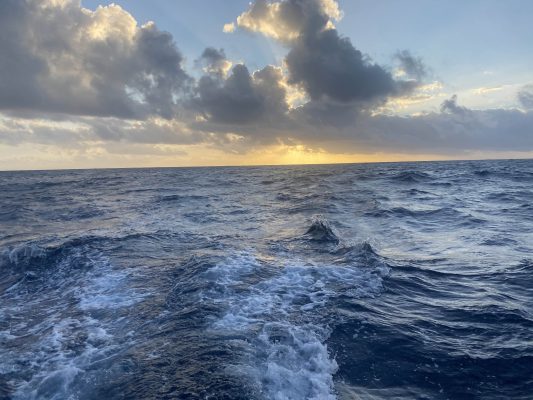
After getting smashed around for the last couple of days, the wind backed off over night and it’s now 15, gusting to 20 – which makes a lot of difference to the sea conditions, which are now less “Wigwam’y”… The wind has also gone round a bit further, so the seas are coming it at 45 degrees behind us, which means less slamming too. We’re down to 1 reef now and the computer says it’s 760 nautical miles to our destination.
Whilst this is a pretty mega journey, I think it’s much less daunting than it would have been only a few years ago. We are fully connected to the internet with Starlink and it’s pretty mental that you get fast internet in the middle of the pacific and it’s good value for money too – only an extra £2.50 per GB whilst you’re off-shore.
As with most things, we also try to ensure we have backups, so there isn’t a single point of failure… Apart from making sure you can be entertained in the middle of the ocean, it’s about the safety factor of getting regular weather updates and keeping people updated if there were an emergency.
As I said, the main comms device is Starlink and we upgraded to a Starlink Mini before we left Galapagos. They’ve come down in price massively and I think we paid $200 for ours. It’s much smaller than our original “Dishy 2”, (which is now packed away as a spare just in case). The mini also uses a lot less power, which helps with us managing our batteries.
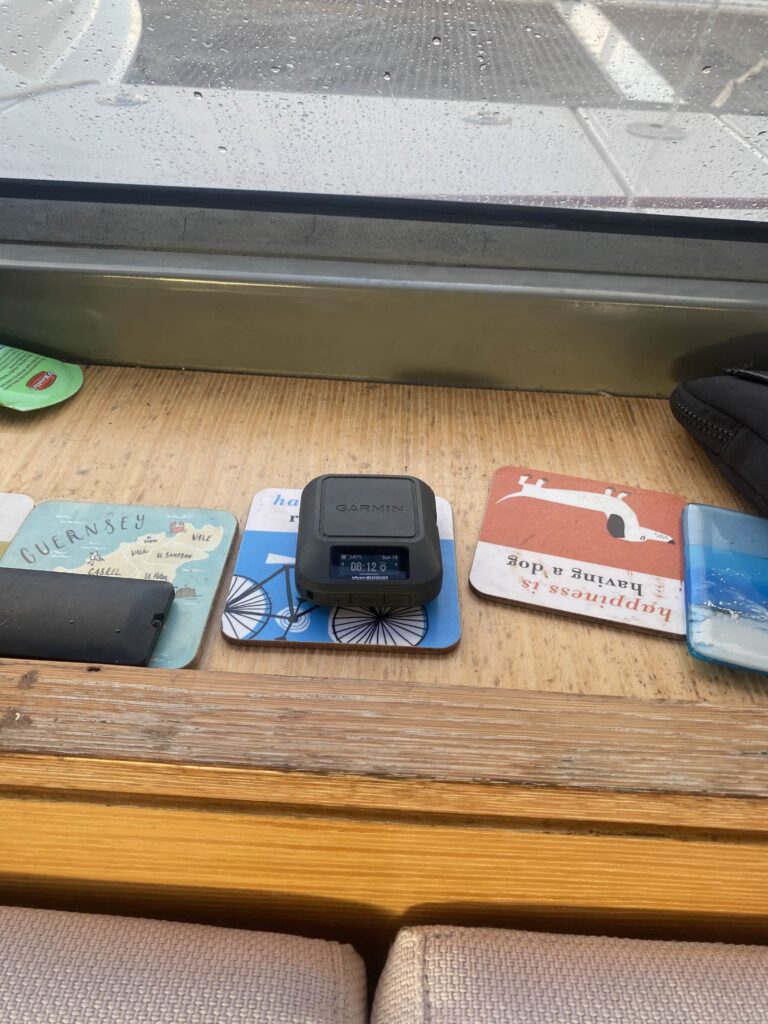
However, we also need to have a backup if Starlink were to go down (which it did for a few hours just before we left), and for that we have a Garmin Messenger. Very simple, waterproof, and with a long battery life, it’s what’s keeping our tracker up to date. It has a big “Emergency” button on the side if we ever needed to push it. You can also send and receive simple text messages. If we ever have to abandon ship, this would be one of the first things we’d grab.
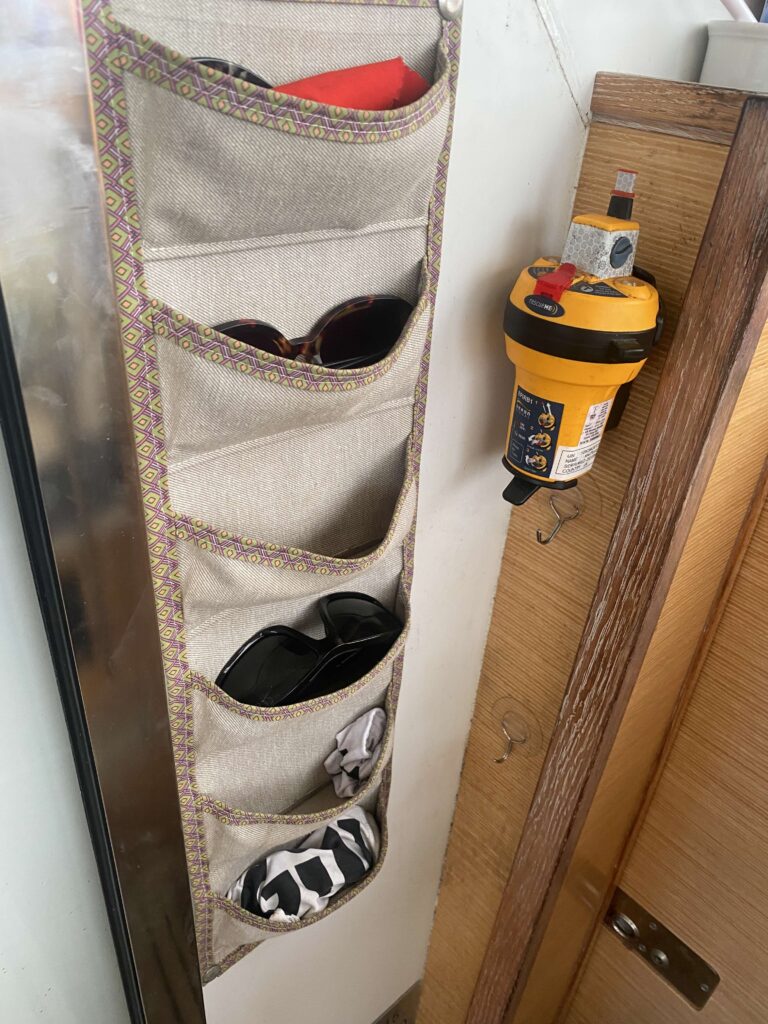
Then we have the classic yellow “Emergency Position-Indicating Radiobeacon” (EPIRB). You can turn it on manually or it’ll activate if it goes into the water… It sends your positions with an emergency message to the coastguard. We’d grab this too, but the problem is that it’s send-only, so you have no way of knowing if help is coming.

When we are offshore, internet access is Pay As you Go (PAYG) and we have had experiences in the past of laptops or applications updating themselves and giving us a large bill to deal with!… As you’d expect, there are lots of things networked together on Nautilus, so what I do is setup a 2nd wifi network when we’re away from land… The boat network is configured with very limited internet access for things like whatsapp, the blog and tracking. The other network has full internet access and we jump onto that when we need to work, and then hop-off at the end (which seems to work well and we’ve kept our usage down to 18GB for this trip so far.
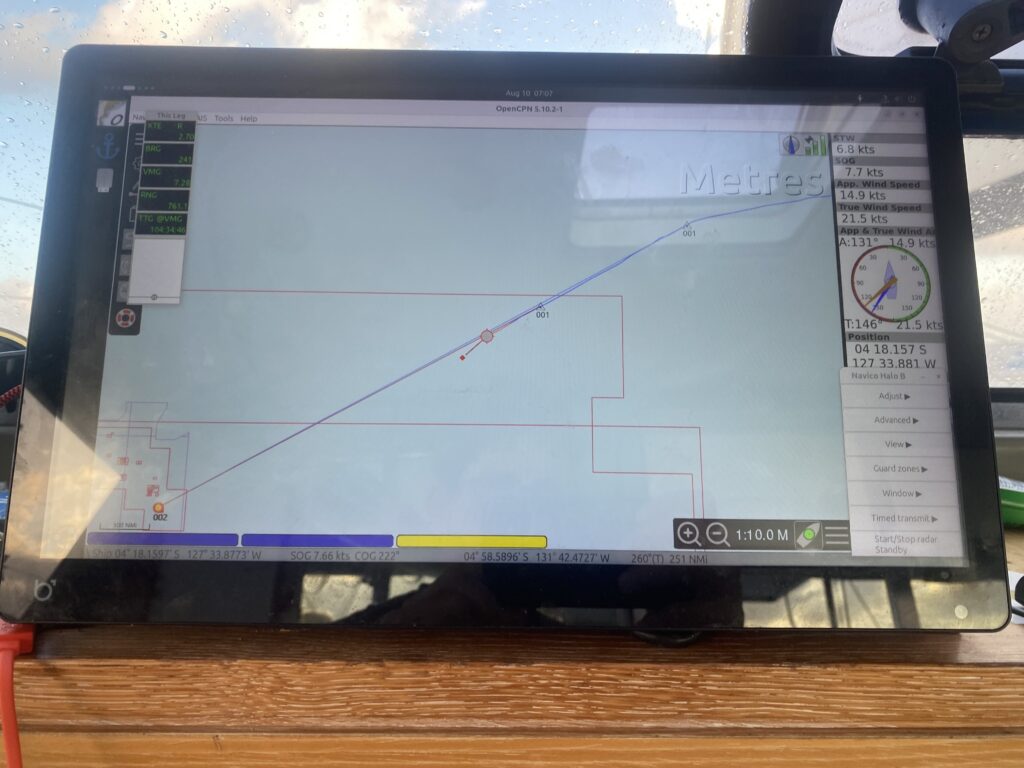
For this sort of sailing – the Autopilot is doing most of work, we’re just keeping an eye on things to ensure everything is behaving properly and to keep us on track. Most of the time the person on watch is inside watching the numbers and keeping eye on the weather and sea… I built this computer a couple of years ago for us and it works pretty well… We use an app called OpenCPN for the charts, radar and ship identification. I then wrote a bunch of apps that we use for managing the boat, watching the wind and keeping a digital logbook.
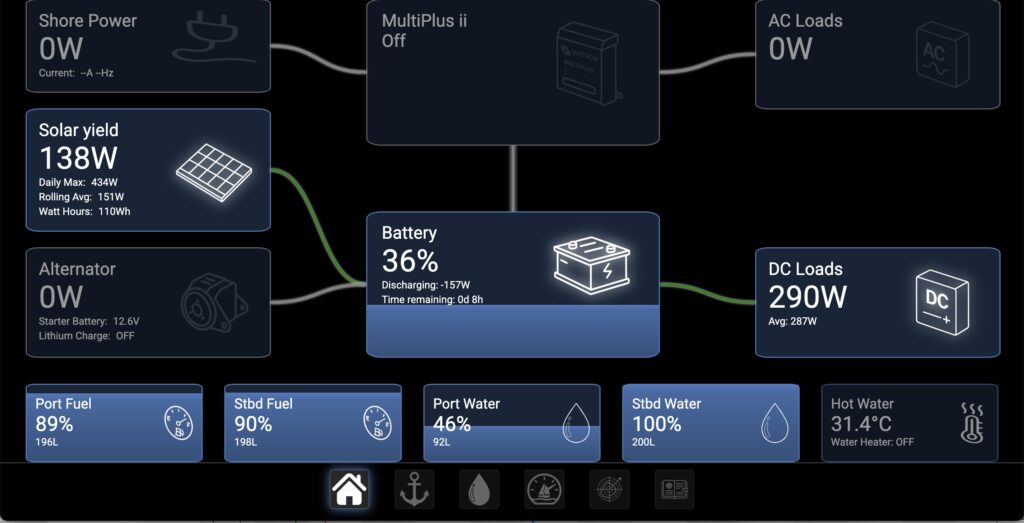
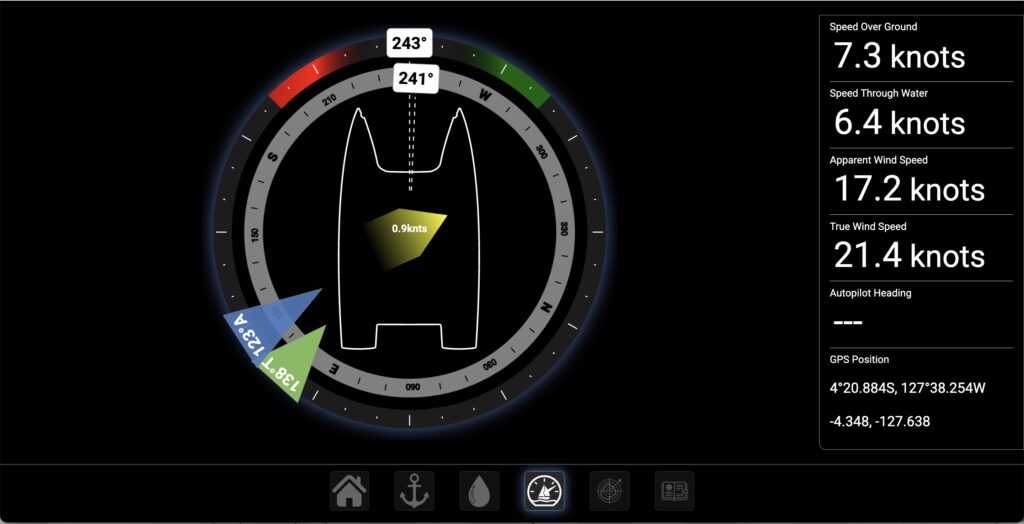
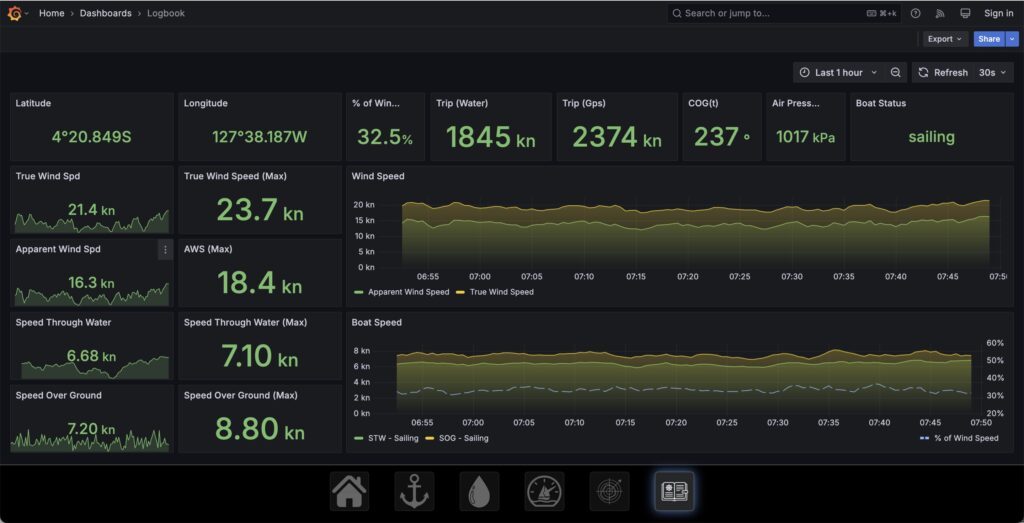
And the finally we have the weather routing apps we use. They both run on my laptop and help calculate the fastest or smoothest route for you to take based on the available weather models. I’ll usually download the data for these a couple of times a day and updating our planned course on the nav computer.
It makes life so much easier then the models all agree too!
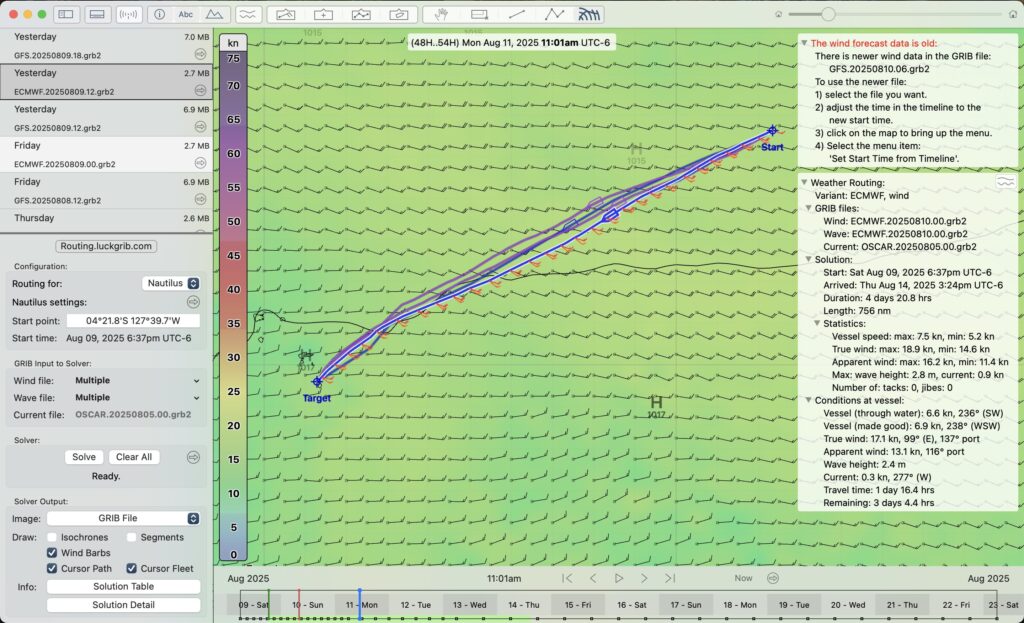
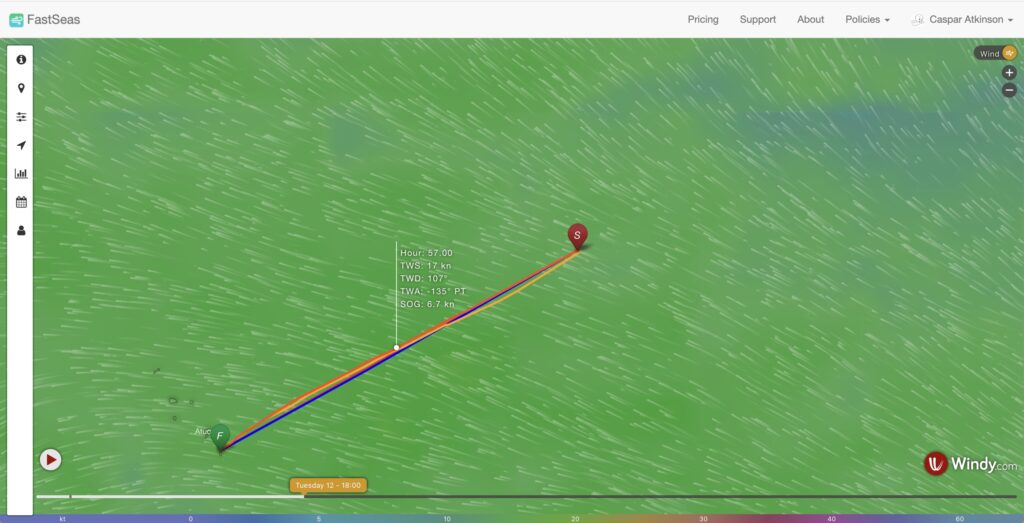
So we’re settling into the final push for the line… looking ahead on Marine Traffic there are some Japanese fishing fleets around us we will need to skirt around. Also our ETA is in the early hours of the morning… it’s too soon at the moment, but we’ll have to watch whether we can make it in daylight or we’ll need to slow down to arrive the next day.
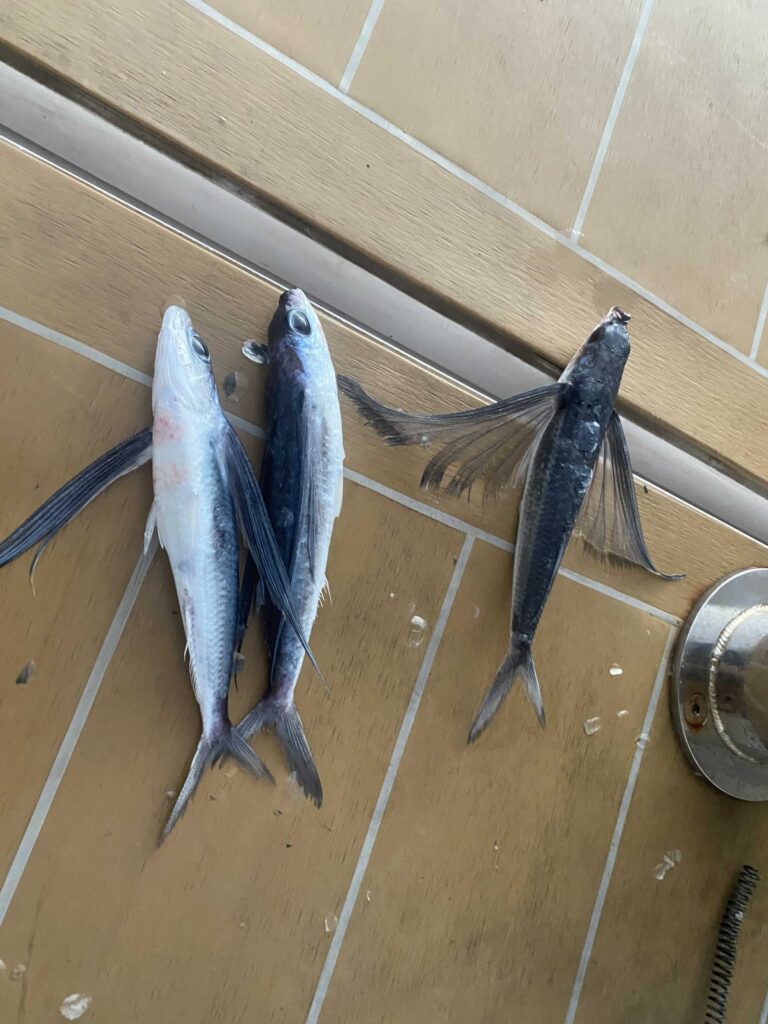
Suicidal squid have eased off, but the flying fish are picking up again